
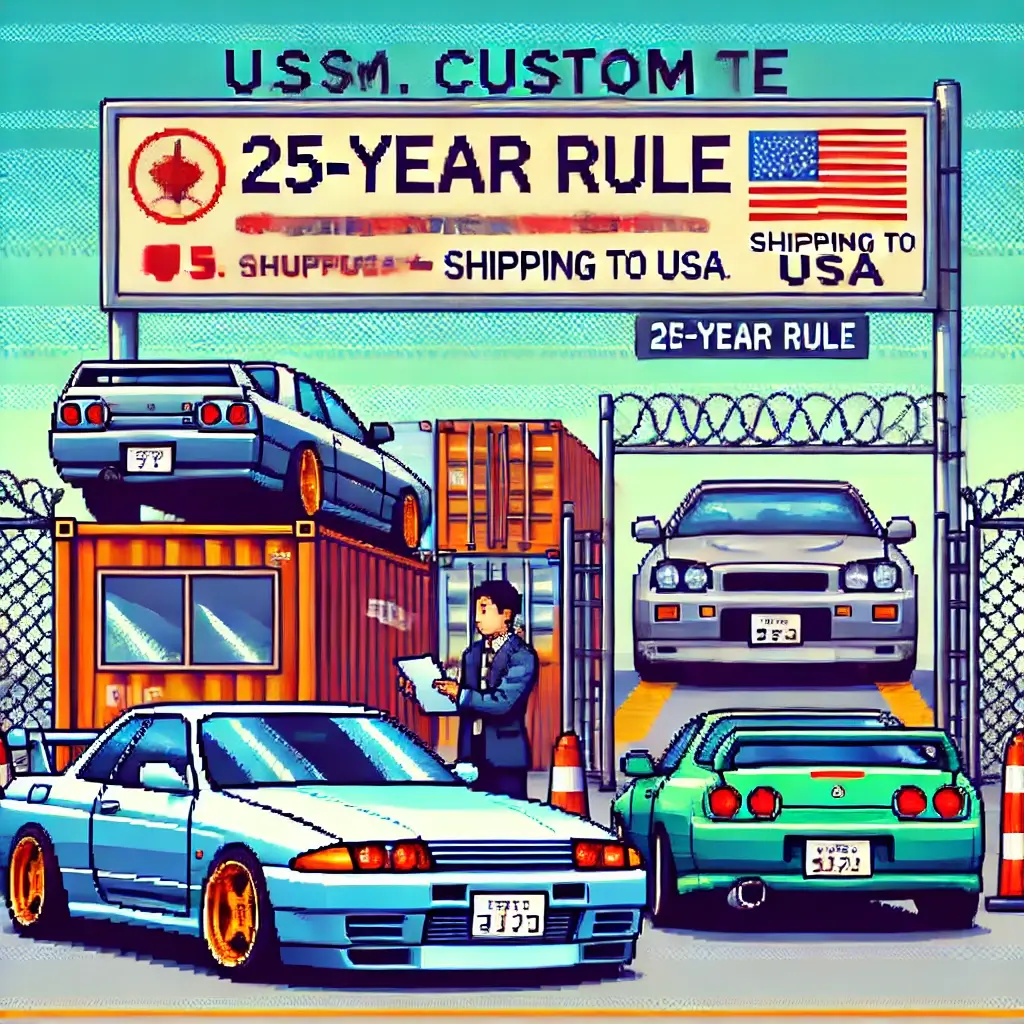
Unleash the Beast: 3 Critical Steps to Importing Your Dream JDM Car to the USA
So, you’ve been scrolling through Instagram, drooling over those pristine Nissan Skylines, iconic Toyota Supras, and quirky little kei cars you can’t find anywhere in the States.
The thought of owning a piece of automotive history, a car with true soul, has been a late-night fantasy for years.
You’re not alone.
The allure of Japanese Domestic Market (JDM) cars is a fever that infects thousands of enthusiasts across America.
It’s a passion that goes beyond just owning a vehicle; it’s about owning a legend, a symbol of a golden age of engineering.
But then, reality sets in.
How do you even begin to navigate the labyrinthine process of importing a car from halfway around the world?
You’ve heard horror stories of cars being seized by customs, of paperwork nightmares, and of hidden costs that balloon the budget out of control.
Well, take a deep breath.
I’m here to tell you that while it’s not as simple as buying a used Civic from your local dealer, it’s far from impossible.
With the right knowledge, a good dose of patience, and a solid plan, you can absolutely get that dream JDM car parked in your driveway.
Consider me your seasoned guide, your Yoda in the world of JDM imports.
I’ve been down this road, felt the anxiety, and celebrated the victory of a successful import.
This isn’t some generic guide pulled from a dusty forum; this is real-world advice from someone who’s lived it.
We’ll break down the entire process, from the legalities that are non-negotiable to the nitty-gritty of costs and the common pitfalls that can turn your dream into a nightmare.
By the end of this guide, you’ll have a clear roadmap, the confidence to start your journey, and the knowledge to avoid the landmines that stop so many people in their tracks. —
Table of Contents
1. The Golden Rule: Understanding the 25-Year Rule
This is the first and most important piece of information you need to engrave in your mind.
The United States has a law, often called the “25-Year Rule,” which is part of the Imported Vehicle Safety Compliance Act of 1988.
This rule states that any vehicle not originally manufactured to meet U.S. safety and emission standards (which applies to almost all JDM cars) can be imported and registered without extensive modifications, as long as it is at least 25 years old from its date of manufacture.
Yes, you read that right: 25 years.
This isn’t a suggestion; it’s the law.
If you try to import a car that is 24 years, 11 months, and 29 days old, it will be seized and crushed. End of story.
Don’t try to be a hero; the feds do not play around with this.
The “date of manufacture” is key here.
It’s not the model year, but the specific month and year the car rolled off the assembly line.
This is usually found on a sticker in the door jamb or on a plate under the hood.
So, a 1999 Nissan Skyline GT-R isn’t eligible for import until the specific month in 2024 that marks its 25th birthday.
This rule is the gatekeeper of your JDM dreams.
It’s the reason why the most sought-after JDM cars, like the R32 Skyline GT-R, have become so popular and, consequently, so expensive.
They are the first ones to have “gone legal” and are no longer a gray-market fantasy.
INFOGRAPHIC: The JDM Import Journey – A Visual Guide
STEP 1: The Golden Rule
Check if the car is 25 years or older. This is non-negotiable.
STEP 2: Find Your Car
Use auctions, dealers, or private sellers in Japan. Get a reliable agent.
STEP 3: Paperwork & Logistics
Complete CBP Form 7501, HS-7, and get the Bill of Lading. Arrange shipping.
STEP 4: Arrival & Customs
Car arrives at a U.S. port. Pay duties and clear customs with your documents.
STEP 5: State-Level Registration
Take the car and customs paperwork to your local DMV. Get a title and license plates.
Your JDM dream is now a reality!
There are some exceptions to this rule, like the “Show or Display” exemption for cars with historical or technological significance, but this is a very rare and complicated route for most people.
For 99% of us, the 25-Year Rule is the only path.
So, before you fall in love with a car, find its manufacture date.
It’s the first thing your import agent will ask you about, and it’s the only question that truly matters at the start. —
2. The Import Process Demystified: From Auction to Your Driveway
Alright, so you’ve found the perfect car that meets the 25-year-old criteria. Now what?
This is where the real work begins, and a solid plan will save you a world of pain and money.
The journey from Japan to your garage is a multi-step process that can be broken down into a few key phases.
Finding the Right Car: The Hunt Begins
Most JDM cars are purchased through Japanese car auctions.
Sites like USS, TAA, and CAA are massive, organized systems where you can find almost any car imaginable.
The trick is, you can’t just log in and bid yourself.
You need a licensed import agent in Japan to do this for you.
This agent will be your eyes and ears on the ground.
They will get you access to auction sheets, which are detailed reports on the car’s condition, including a grade for both the exterior and interior, and any existing damage.
Think of it like an online dating profile for cars, but a lot more honest.
A good agent will also go to the physical auction lot and inspect the car for you, verifying the auction sheet’s information and spotting any red flags that might not be on the report.
This is a critical step.
That beautiful Grade 4 car on paper might have a rust spot you can only see up close, or an engine noise that sounds like a faint ghost wailing.
Your agent is your trusted partner; choose wisely.
Don’t just pick the cheapest one. Look for an agent with a great reputation, a long history of successful imports, and who is responsive to your questions.
The right agent is worth their weight in gold.
Paperwork and Shipping: The Logistical Tango
Once you win the bid on your car, the real paperwork begins.
Your agent will handle the initial transfer of funds and the de-registration of the vehicle in Japan.
Then comes the shipping.
This is usually done via a Roll-on/Roll-off (Ro-Ro) vessel, where the car is simply driven onto the ship and secured, or in a shipping container.
Ro-Ro is typically cheaper but offers less protection.
A container, while more expensive, provides a sealed, secure environment, which is what I personally recommend for a car you’ve just spent a small fortune on.
It’s like sending your kid off to camp; you want them to be safe and sound.
Before the car ships, you need to prepare the U.S. side of the paperwork.
You’ll need a Customs and Border Protection (CBP) Form 7501 (Entry Summary) and a National Highway Traffic Safety Administration (NHTSA) Form HS-7.
The HS-7 form is where you’ll declare that the car is over 25 years old and exempt from U.S. standards.
This is the most important piece of paper you’ll fill out.
Make sure it’s filled out correctly and honestly.
You’ll also receive a Bill of Lading from the shipping company, which acts as the title for the car while it’s at sea.
It’s proof that you own it and are the rightful importer.
Keep a physical copy of all these documents in a safe place. You’ll need them at the port.
Arrival and Customs: The Final Boss Battle
The day the ship docks is a mix of excitement and anxiety.
Your car has arrived, but it’s not yours yet.
It’s still in the hands of customs.
You or a customs broker you’ve hired will need to go to the port with your paperwork.
You’ll pay the import duties, which are typically 2.5% of the car’s declared value for passenger vehicles.
You’ll also pay a small Harbor Maintenance Fee (HMF) and potentially other port charges.
The customs officer will inspect your documents and, in some cases, the car itself, to verify its VIN and eligibility.
If all your paperwork is in order, they will stamp your forms and release the vehicle to you.
This is the moment of truth.
It’s the last hurdle before you can finally touch and drive your new ride. —
3. What It Really Costs: Crunching the Numbers
Let’s talk money, because this isn’t a cheap hobby.
The total cost of importing a JDM car is often a lot more than just the purchase price of the vehicle itself.
You need to budget for every single step to avoid being caught off guard.
The Big Three: Purchase, Agent, and Shipping
The first and most obvious cost is the car itself.
This is the auction price you pay for the vehicle.
But on top of that, you have to pay the import agent’s fees.
These fees vary but typically range from a few hundred to over a thousand dollars, depending on the services they provide.
Some agents include auction access, bidding, and initial transport in their fee, while others charge for each service individually.
Shipping is the next major expense.
Ro-Ro can be anywhere from $1,000 to $2,000, while a container can easily run you $2,500 to $4,000 or more, especially if you’re splitting the cost with another importer.
The cost also depends on the port you’re shipping to and from.
Government Fees and Taxes: The Unavoidable Charges
As mentioned before, you’ll be paying import duties (2.5% of the declared value), and the Harbor Maintenance Fee (HMF), which is a small percentage of the value.
And then there’s the dreaded tax man.
Some states will charge sales tax on the car when you register it, just as they would with a domestic purchase.
This can be a significant chunk of change, so check your state’s DMV website to see their rules on out-of-state or imported vehicle registration.
Hidden and Unexpected Costs: The Landmines
This is where things can get messy if you’re not prepared.
What if your car needs a new battery or tires when it arrives?
Or what if you have to pay for a tow truck from the port to your home?
These small costs can add up quickly.
The biggest potential cost, though, is maintenance and repairs.
The car is at least 25 years old. Things are going to break.
You might need to replace an old timing belt, change fluids, or fix a leaky gasket.
Sourcing parts for a JDM car can be a challenge, and they’re often more expensive than domestic parts.
My advice is to set aside a good 20-30% of the car’s purchase price for unexpected costs and initial maintenance.
It’s better to have it and not need it than to need it and not have it. —
4. Common Pitfalls and How to Dodge Them
Every journey has its obstacles, and importing a JDM car is no different.
I’ve seen it all, from the mild inconvenience to the full-blown catastrophe.
Here are some of the most common mistakes people make and how you can avoid them.
Pitfall #1: The “Too Good to Be True” Deal
If a car’s price seems ridiculously low, there’s probably a good reason for it.
It might have significant rust, a bad engine, or a shady history that an inexperienced eye would miss.
This is where a good agent is crucial.
They can help you avoid a money pit and make sure you’re getting what you pay for.
Remember that the auction sheet isn’t the final word, so a physical inspection is key.
Pitfall #2: Incomplete or Incorrect Paperwork
This is the fastest way to get your car seized or delayed at the port.
Double-check every form, every signature, and every date.
A single typo can cause a massive headache.
If you’re not confident in your ability to navigate the bureaucracy, hire a customs broker.
They are professionals who do this for a living and can save you from a world of hurt for a reasonable fee.
Pitfall #3: Underestimating the Total Cost
This is a big one.
People get so excited about the auction price that they forget about shipping, duties, port fees, and the inevitable repairs.
Create a spreadsheet and budget for every single cost you can think of, and then add a 20% contingency fund.
Trust me on this; you’ll be glad you did. —
5. The Emotional Rollercoaster and Final Thoughts
Importing a JDM car isn’t just a transaction; it’s a deeply personal and emotional journey.
There will be moments of pure excitement, like when your agent sends you the first pictures of the car you just won.
There will be moments of intense anxiety, like when the ship is delayed and you have no idea why.
And there will be moments of pure joy, like when you finally start that engine for the very first time on U.S. soil.
It’s a rite of passage for any serious car enthusiast.
It’s a story you’ll tell for years to come.
My final piece of advice is to be patient, do your homework, and work with people you can trust.
Don’t rush the process, and don’t take shortcuts.
The reward of having your dream car, a truly unique machine with a story to tell, is worth every single step of the way. —
6. Essential Resources
To help you on your journey, here are some reliable resources to get you started. These links will take you to official government websites or reputable import agents to help you verify information and get professional assistance.
JDM, Import, 25-Year Rule, Skyline, Supra
🔗 Australian Outback Motorcycle Tour Posted 2025-08-18 07:24 UTC 🔗 Independent Jazz Musicians Posted 2025-08-17 10:45 UTC 🔗 The Lord of the Rings Posted 2025-08-17 10:09 UTC 🔗 Video Game Music Production Posted 2025-08-17 09:40 UTC 🔗 C.P.E. Bach’s Cello Concerto Posted (date not provided) 🔗 3 Must-Have Off-Road Upgrades for Your Adventure Bike Posted 2025-08-17