From Six Seasons of Brawls and Betrayals: How Music Gave Peaky Blinders Its Savage Soul
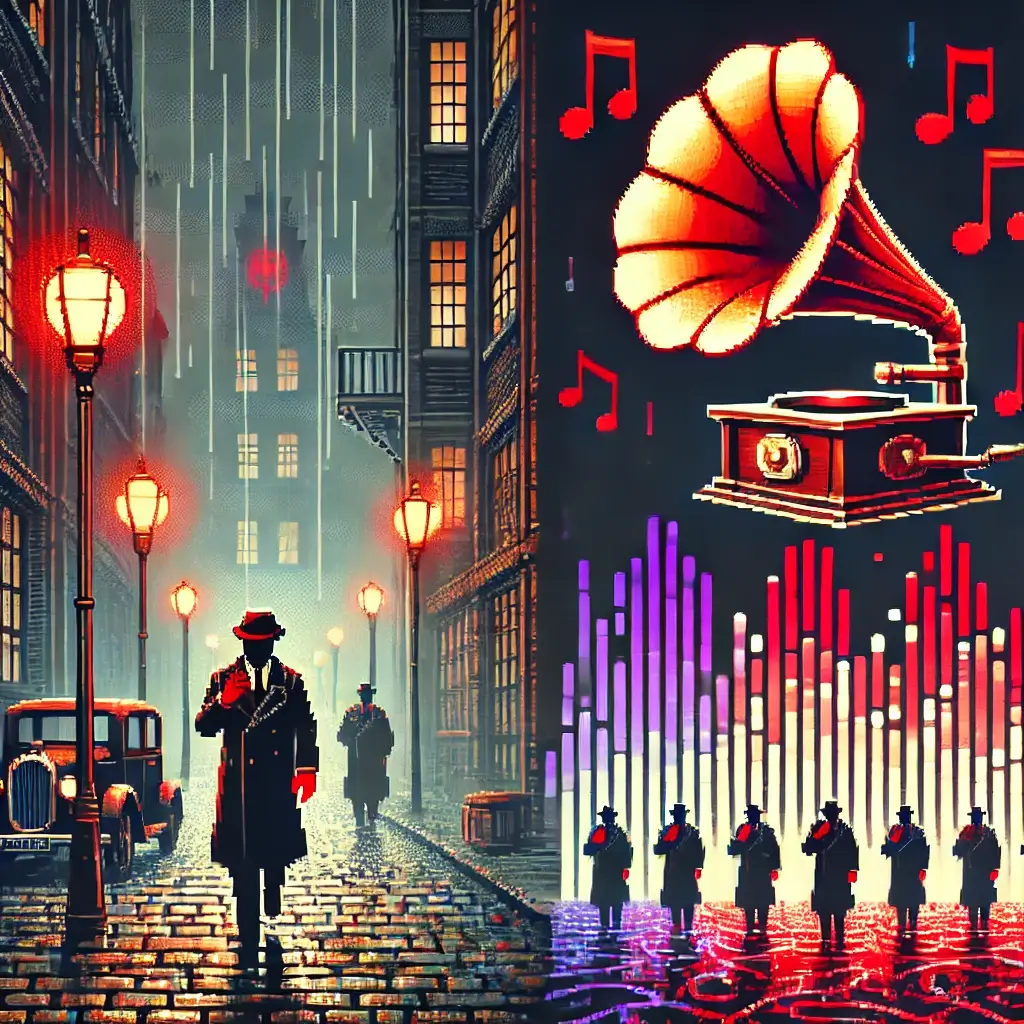
You know the moment. That slow-motion walk, the rain slicking the cobblestones, the Shelby boys in their iconic caps and trench coats. And then it hits you: that gut-punch of a bassline, the raw, snarling guitar riff, and the deep, unsettling voice of Nick Cave.
In a show set in the 1920s, why on earth are we hearing the kind of music that sounds like it belongs in a mosh pit, not a post-WWI industrial city? I’m talking about **Red Right Hand**, the theme song that has become so intertwined with the very DNA of *Peaky Blinders* that it’s almost impossible to hear it now without seeing Tommy Shelby’s face.
But it’s not just the theme song. The entire series, all **six seasons** of it, is a masterclass in using music to defy expectations and create an atmosphere so palpable you can almost taste the whiskey and cigarette smoke.
I’ve been watching this show since it first dropped, and as a music obsessive, I was hooked from that very first episode. I’ve seen countless shows try to use modern music in a period piece, and it often feels jarring, like a cheap gimmick. But with *Peaky Blinders*, it feels… right. It’s an anachronism that works so perfectly, it stops being a flaw and becomes a superpower. It tells us something about the characters and the world they inhabit that dialogue alone never could.
So, let’s pull back the curtain and take a look at how this show’s soundtrack became its savage soul. We’re going to dive into the heart of the music that made the Shelby family’s story unforgettable. —
Table of Contents
—
The Unforgettable Hook: “Red Right Hand” and Its Sinister Charm
Let’s start with the one you can’t get out of your head. Nick Cave & The Bad Seeds’ “Red Right Hand” isn’t just a song; it’s a character in its own right.
The very first time you hear it, it sets a tone that says, “This isn’t your grandfather’s gangster show.”
It’s gritty, it’s menacing, and its lyrics—”He’ll call you by name and with a gun in his hand”—perfectly capture the sinister, all-knowing presence of Tommy Shelby and the Peaky Blinders themselves.
This track was chosen by director Otto Bathurst for the very first series, and it laid the groundwork for everything that followed.
It’s so iconic that other artists, like PJ Harvey and Arctic Monkeys, have done their own incredible covers for later seasons, each one adding a new layer to the song’s dark mythology.
It became a promise to the audience: this is a show where the past meets the present, where old-world brutality is fueled by a modern, rebellious energy. —
More Than Just a Theme: The Rebel Spirit of Rock
One of the most fascinating things about the *Peaky Blinders* soundtrack is how it subverts the typical period drama.
Instead of polite jazz and foxtrots, we get the raw, untamed sounds of garage rock, blues, and punk.
Think about it: The White Stripes’ “St. James Infirmary Blues,” PJ Harvey’s “To Bring You My Love,” or Royal Blood’s “Come On Over.” These aren’t just background tracks; they’re musical manifestations of the characters’ inner turmoil.
The music, often sourced from the likes of The White Stripes, PJ Harvey, and Arctic Monkeys, isn’t meant to be a literal representation of the 1920s.
It’s a sonic metaphor for the show’s themes: the chaos of post-WWI Britain, the rebellion against the old guard, and the deep-seated psychological scars of its characters.
When Tommy is making a deal or planning a hit, the music amplifies his cold, calculated ruthlessness.
When he’s grappling with his PTSD or a moment of vulnerability, the music can switch to something more melancholic, like a track from Radiohead or Laura Marling, and suddenly we’re inside his fractured mind.
This isn’t just a playlist; it’s a psychological tool. —
Finding Tommy Shelby’s Soul in Sound
Let’s be honest, Cillian Murphy’s performance as Tommy Shelby is transcendent.
He says so much with a single glance, a twitch of his lips, or a drag of a cigarette.
The music is often the only thing that gives us a window into his tortured soul.
The brooding, atmospheric tracks from Nick Cave and PJ Harvey echo his inner darkness and constant state of conflict.
Songs like Radiohead’s “You and Whose Army?” perfectly capture his sense of being an outsider, a man fighting a war on all fronts, against the government, rival gangs, and even his own family.
And then there’s the iconic scene with David Bowie’s “Lazarus” in Season 3. When Tommy finds out his wife Grace has been shot, the song comes on and it’s a moment of profound, gut-wrenching grief.
The music isn’t just a soundtrack; it’s his emotional barometer. It externalizes the pain and struggle he keeps so tightly locked away.
That’s the true genius of the show’s musical direction: it turns music into a character, a storyteller that fills in the gaps where words fail.
It’s like having a best friend who just gets you, and they put on the perfect song for the exact moment you’re in. —
A Musical Journey Through the Peaky Blinders Saga
To truly appreciate the artistry, you have to look at how the music evolves with the series. It’s not a static playlist; it’s a living, breathing part of the narrative.
Season 1: The Raw Beginning
This is where we’re introduced to the core sound. The focus is on raw, bluesy tracks from Nick Cave & The Bad Seeds, The White Stripes, and Black Rebel Motorcycle Club.
The music here is about establishing the world—a grimy, dangerous Birmingham where every step is a gamble.
The songs feel like they were torn from the very earth of Small Heath.
Season 2: Expansion and Escalation
As the Shelby family expands their empire to London, the music gets bigger, more expansive.
We see the introduction of British rock bands like Arctic Monkeys and Royal Blood, reflecting the Peaky Blinders’ rising ambition and the increasing scale of their conflicts.
The music feels more polished but no less dangerous.
For me, the use of Arctic Monkeys’ “Do I Wanna Know?” was a masterstroke—it’s slick, sexy, and utterly cool, just like the Peaky Blinders themselves.
Season 3: The Darkest Hour
This season gets really dark, really fast. The music follows suit.
We see more brooding, atmospheric tracks from Radiohead and PJ Harvey.
The soundtrack is less about swagger and more about the suffocating weight of power and tragedy.
The use of David Bowie’s “Lazarus” is perhaps the most famous example—it’s a heartbreaking tribute and a final, brilliant act of musical direction.
Season 4: Back to the Streets
After the disasters of the previous season, the music in Season 4 brings us back to a more grounded, visceral sound.
It’s a return to the blues and garage rock that defined the early seasons, reflecting the Shelbys’ fight for survival against a new enemy, the New York mob.
It’s raw, it’s brutal, and it’s perfect for a season about a family reclaiming its roots.
Seasons 5 & 6: The End of an Era
The final two seasons go deeper into Tommy’s psyche, and the music becomes more complex and introspective.
Anna Calvi’s score in Season 5 is hauntingly beautiful, and the use of tracks from IDLES and Thom Yorke in Season 6 perfectly encapsulates the final descent into chaos and resolution.
The music here isn’t just supporting the story; it’s a central part of Tommy’s final confrontation with his own demons. —
Beyond the Screen: The Music’s Cultural Phenomenon
It’s not just the show’s fans who’ve been impacted. *Peaky Blinders* has introduced a whole new generation to artists they might never have heard otherwise.
Suddenly, garage rock from the early 2000s and blues from decades past are finding new life on streaming playlists.
The show’s musical choices have influenced everything from fashion to real-life musical events.
And let’s not forget the “Peaky Blinders Festival” in Birmingham, where fans can experience the show’s world and its music firsthand. It’s a testament to how deeply the soundtrack has resonated with people.
This isn’t just about a TV show; it’s about how music can transcend its time and purpose to create something truly iconic.
It’s proof that a creative team with a vision and the guts to break the rules can create a sensory experience that’s a thousand times more impactful than sticking to what’s “historically accurate.”
—
The Peaky Blinders Soundtrack by the Numbers
Sometimes, seeing the data makes the impact even more clear. This infographic breaks down the musical DNA of the show. We’re going to visualize the sheer volume and diversity of the artists involved, because it’s honestly wild.
Peaky Blinders: A Musical Legacy
Dominant Artists by Number of Tracks
A few legends form the backbone of the series’ sound.
Nick Cave & The Bad Seeds
15+
Tracks including the theme song
PJ Harvey
10+
Essential to the show’s dark soul
Radiohead & Thom Yorke
8+
Adding a layer of melancholy
The White Stripes & Jack White
7+
Blues-infused rock ‘n’ roll energy
Anachronism at Its Finest
The show masterfully blends music from different decades to create a timeless feel.
1970s
David Bowie
For moments of dramatic gravity
1990s
PJ Harvey, Nick Cave
The core of the show’s dark, gothic sound
2000s & 2010s
Arctic Monkeys, The White Stripes, Royal Blood
Adding a modern, rebellious edge
This infographic is a general representation based on common and frequently used artists throughout the series. It’s a testament to the show’s incredible musical depth across all six seasons.
Peaky Blinders is a cinematic marvel, and its music is a huge part of what makes it so. It’s not a historical documentary; it’s a piece of art that uses every tool at its disposal to tell a story, and the music is arguably the most powerful one. It speaks to the human experience of struggle, ambition, and heartache in a way that’s universal, regardless of the era.
In the end, the anachronistic music of *Peaky Blinders* is a bold statement. It’s the sound of a family forging its own path, creating its own rules, and fighting to survive in a world that’s trying to crush them. It’s a soundtrack that’s as ruthless, stylish, and unforgettable as the Peaky Blinders themselves.
So, the next time you hear a track from the show, close your eyes and listen. You’ll hear more than just a song; you’ll hear the beating heart of Tommy Shelby and the entire Shelby family saga.
Peaky Blinders, Tommy Shelby, Nick Cave, Red Right Hand, Soundtrack
🔗 The $100 Million Gamble: How NBA Contracts Exploded and Changed Basketball Forever Posted 2025-08-18 10:05 UTC 🔗 Post-Retirement Tycoons Posted 2025-08-18 09:40 UTC 🔗 Minimalist Parenting in Small Urban Apartments Posted 2025-08-18 09:18 UTC 🔗 Unleash the Beast: Importing Your Dream JDM Car Posted 2025-08-18 07:55 UTC 🔗 Australian Outback Motorcycle Tour Posted (no date available) 🔗 7 Ethical Fashion Brands That Will Change Your Wardrobe Posted 2025-08-18