
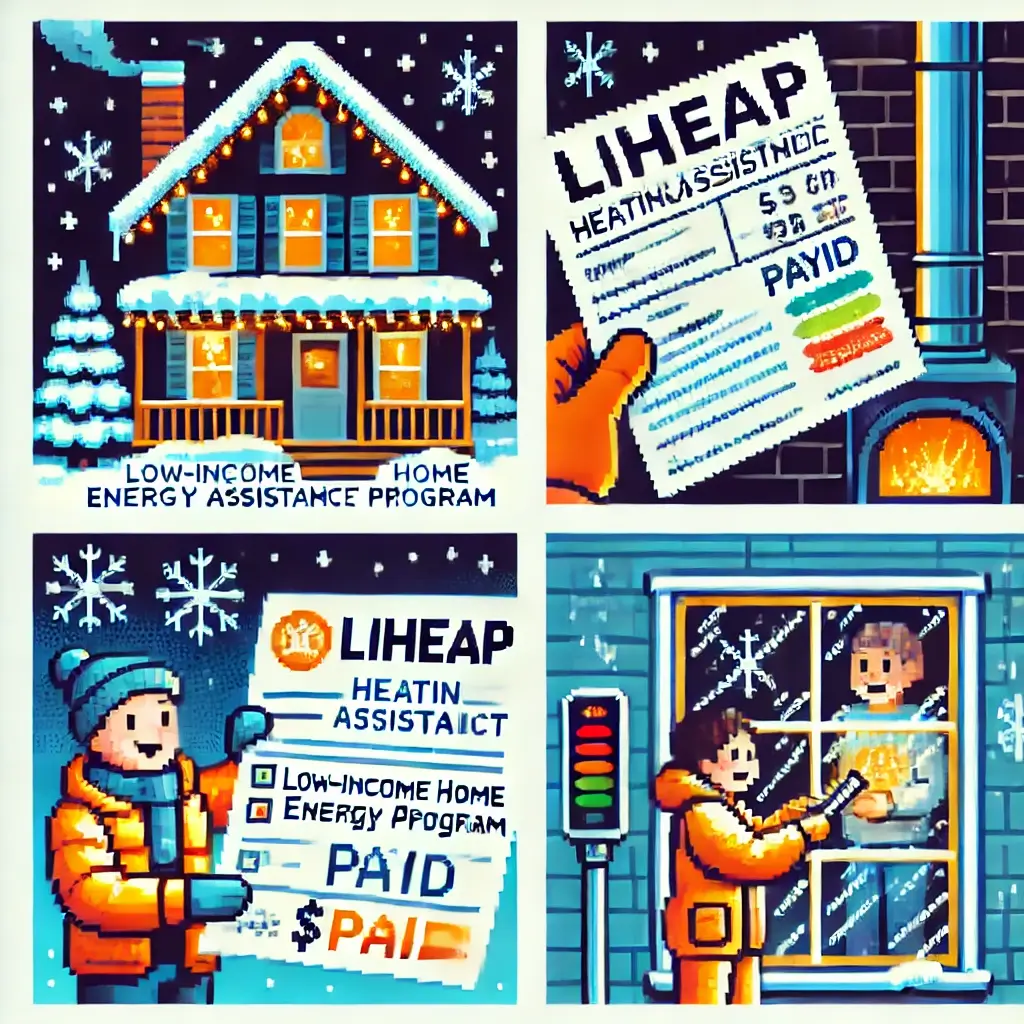
5 Mind-Blowing LIHEAP Hacks You Need to Know RIGHT NOW!
Are you feeling that chill creeping in?
I’m not just talking about the winter wind outside.
I’m talking about that icy dread that hits you every time you see your utility bill climbing higher and higher.
I’ve been there, friend.
I remember one winter, I was so desperate I was wearing three layers of sweaters just to avoid turning up the thermostat.
It felt like I was living in a refrigerator.
But then, I found my way to the Low-Income Energy Assistance Program, or LIHEAP.
And let me tell you, it was a game-changer.
But here’s the thing, just applying isn’t enough.
You need to know the hacks.
The secrets the caseworkers don’t always have time to tell you.
The little tricks that can mean the difference between getting a small credit and getting a huge chunk of your bill paid off.
I’ve spent years digging into this, helping my neighbors, and figuring out the system.
I’m not a government official or a faceless agency.
I’m just a person who knows the struggle, and I’m here to share everything I’ve learned to help you get the support you deserve.
This isn’t just about a one-time check.
It’s about empowering you to take control of your energy costs and your peace of mind.
Let’s dive in!
—
Table of Contents: Your Roadmap to LIHEAP Success!
- What Exactly Is LIHEAP and Who Can Get It?
- Hack #1: Don’t Wait for a Crisis! Apply Early and Often
- Hack #2: The Little-Known “Other” LIHEAP Benefit You’re Missing Out On
- Hack #3: Why Your Paperwork Is a Superpower!
- Hack #4: The Power of the P-Word: Partner!
- Hack #5: Turn Your Home Into a Fortress of Warmth!
- LIHEAP FAQ: Your Most Burning Questions, Answered!
- Essential Resources: Where to Go for Help
—
What Exactly Is LIHEAP and Who Can Get It?
Before we get to the good stuff—the hacks—we have to cover the basics.
Think of LIHEAP as a safety net.
It’s a federally funded program that helps low-income households with their heating and cooling costs.
It’s not a loan you have to pay back, and it’s not some crazy, convoluted program only a rocket scientist could figure out.
It’s a grant.
Free money, essentially, to keep your lights on and your family warm.
The money goes directly to your utility company, so you don’t even have to handle it yourself.
It’s like having a secret superhero swooping in to pay your bill.
So, who qualifies for this superhero aid?
The rules can vary a bit from state to state, but the general guideline is based on your household income and size.
Typically, your income must be at or below 150% of the federal poverty guidelines.
However, some states are more generous, and you might qualify if your income is up to 60% of your state’s median income.
My advice? Don’t assume you don’t qualify.
Even if you think you might be slightly over the limit, it’s always worth checking.
The worst they can say is no, and you’ll be no worse off than you were before.
But if they say yes, you could save hundreds, even thousands, of dollars.
And that’s the kind of gamble I’ll take every single time.
One more thing to remember: you don’t have to be a U.S. citizen to apply.
Legal permanent residents and other qualified non-citizens can also be eligible.
Don’t let myths stop you from getting the help you need.
—
Hack #1: Don’t Wait for a Crisis! Apply Early and Often
This is probably the single most important piece of advice I can give you.
The LIHEAP funds are not an endless pot of gold.
They’re distributed on a first-come, first-served basis.
And when I say they run out, I mean they can run out fast.
It’s like a concert for your favorite band, but for energy assistance.
If you don’t get your ticket early, you’re left out in the cold—literally.
Most states start accepting applications in the fall, often in September or October.
Mark your calendar, set a reminder, do whatever you need to do.
The moment that application window opens, you need to be ready.
I’ve seen so many people wait until they get a shut-off notice in January, only to find out the funds for the winter season are completely gone.
Don’t let that be you.
Also, don’t think of LIHEAP as a one-time thing.
The benefit period can sometimes be for the entire season, but in some states, you can reapply if you have a new crisis, like a sudden job loss or a medical emergency.
Know your state’s rules and be prepared to act quickly if your situation changes.
Think of it as having your emergency kit ready before the storm hits.
—
Hack #2: The Little-Known “Other” LIHEAP Benefit You’re Missing Out On
Most people only think of LIHEAP as a way to pay for their heating or cooling bills.
And while that’s the primary benefit, there’s another hidden gem in the program that can save you a ton of money: weatherization assistance.
This is a separate, but often related, program that can help you make your home more energy-efficient.
We’re talking things like:
- Adding insulation to your attic or walls.
- Sealing air leaks around doors and windows.
- Repairing or replacing a broken furnace or heating system.
This is huge, folks.
A LIHEAP payment might cover one month’s bill, but weatherization can lower your bills for years to come.
It’s like getting a new roof instead of just patching a leak.
I know a guy who got his entire heating system replaced through a weatherization program.
His old one was a clunky, rattling dinosaur that was costing him a fortune.
Now, his new, energy-efficient model has cut his monthly gas bill by nearly 40%.
It’s a long-term solution, not just a band-aid.
When you’re applying for LIHEAP, always ask about the weatherization program.
The eligibility requirements might be slightly different, but the benefits are absolutely worth it.
—
Hack #3: Why Your Paperwork Is a Superpower!
Okay, I get it.
Paperwork is the worst.
It’s a tangled mess of forms, documents, and bureaucratic jargon that can make you want to pull your hair out.
But when it comes to LIHEAP, your paperwork is your secret weapon.
The single biggest reason for a denied application isn’t income—it’s missing or incomplete documentation.
The caseworkers are swamped, and they don’t have time to chase you down for a missing bank statement.
So, you need to be a paperwork ninja.
Before you even start the application, gather everything you need:
- Proof of identity for everyone in your household (birth certificates, driver’s licenses).
- Proof of income for the past 30 days for everyone (pay stubs, Social Security letters, unemployment statements).
- Your current utility bill.
- Proof of residence (lease agreement or a utility bill in your name).
Organize it all in a folder, either physical or digital.
Make copies of everything.
Double-check every single field on the application form.
It might sound tedious, but it can literally shave weeks off the processing time.
I once helped a neighbor who had their application denied because they forgot to sign one line.
One line! It set them back an entire month.
Don’t make that mistake.
Do the work upfront, and you’ll be warm and cozy while others are still waiting for their approval letter.
LIHEAP Application Process: A Visual Guide
Understanding the steps can make all the difference. Here’s a simple infographic to guide you.
1️⃣
Check Eligibility
Confirm you meet income and household criteria. Use online tools if available.
2️⃣
Gather Documents
Collect all required paperwork: ID, proof of income, utility bills, etc.
3️⃣
Submit Application
Apply online, by mail, or in person at a local agency. Do it early!
4️⃣
Wait for Approval
The agency reviews your application. Be patient, but follow up if necessary.
5️⃣
Receive Benefits
The payment is sent directly to your utility company. Your account is credited!
—
Hack #4: The Power of the P-Word: Partner!
I’m not talking about your significant other here, though their support is always great.
I’m talking about your utility company.
That’s right, the very people sending you those scary bills can be your greatest allies in the LIHEAP journey.
Many utility companies have their own assistance programs or special payment plans designed to help customers who are struggling.
Sometimes, they can even fast-track your LIHEAP application for you.
I know, it sounds crazy, but it’s true.
They’re incentivized to keep you as a paying customer, and helping you get a government grant is often the best way to do that.
Call them.
Tell them you’re applying for LIHEAP.
Ask if they have any programs to help with your bill while your application is being processed.
Some companies will put a temporary hold on your account or waive late fees if they know you have a pending LIHEAP application.
It’s like a temporary truce in the battle against your bills.
You’ll be surprised at how helpful they can be.
I once helped a woman who was on the brink of having her power shut off.
We called the utility company together, and they not only paused her shut-off notice but also connected her with a local agency that helped her fill out the application on the spot.
Two weeks later, she had her LIHEAP payment, and her lights were still on.
It’s all about making that connection and not being afraid to ask for help from unexpected places.
—
Hack #5: Turn Your Home Into a Fortress of Warmth!
This hack is a little different, but it’s just as important.
Getting a LIHEAP payment is great, but what if you could make that money go even further?
What if you could make your home so energy-efficient that you don’t even need to use as much energy in the first place?
It’s all about a proactive, not just a reactive, approach.
Simple things can make a huge difference.
Think about it like this: your home is a leaky bucket.
You can keep pouring water (money) into it, but it’s just going to keep leaking out.
Or you can patch the holes first, and then you don’t need as much water to keep it full.
Here are some simple, low-cost ways to patch those holes:
Seal the Leaks: Grab some inexpensive weather stripping and caulk.
Check around all your windows and doors.
Run your hand along the frames on a windy day—do you feel a draft?
That’s money literally flying out the window.
Seal it up.
Use a Smart Thermostat: Many utility companies offer rebates for smart thermostats.
These devices can learn your habits and automatically adjust the temperature when you’re not home, saving you a fortune without you even thinking about it.
Dress for the Weather: This sounds simple, but it’s true.
Wear warmer clothes inside.
Use blankets.
Lowering your thermostat by even a few degrees can make a massive impact on your bill.
This isn’t about being miserable.
It’s about being smart.
The money you save by making your home more efficient is money you can use for groceries, medicine, or anything else your family needs.
—
LIHEAP FAQ: Your Most Burning Questions, Answered!
I get a lot of questions about LIHEAP. Here are some of the most common ones I hear, and my no-nonsense answers.
Q: Will LIHEAP cover my water bill?
A: Generally, no. LIHEAP is specifically for heating and cooling costs, so it covers things like electricity, natural gas, propane, oil, and wood. Water is usually a separate utility and is not covered by this program.
Q: I’m a renter. Can I still apply for LIHEAP?
A: Yes! As long as you are responsible for paying your own heating or cooling costs, you can apply. You’ll need to provide documentation showing you are a resident at the address and are responsible for the utility bill.
Q: What if my utilities are included in my rent?
A: This is a tricky one. In most cases, if your utilities are included in your rent, you are not eligible for the direct payment benefit of LIHEAP. However, you should still check with your local agency. They may have specific programs or assistance available for renters in your situation.
Q: How long does it take to get a decision?
A: The processing time varies greatly by state and agency. It can be anywhere from a few days to several weeks. Applying early with all of your documents in order is the best way to speed up the process. Don’t wait until you’re in an emergency.
—
Essential Resources: Where to Go for Help
Don’t just take my word for it.
The best way to get accurate, up-to-date information is to go straight to the source.
Here are three trusted sites to help you on your LIHEAP journey:
This is the official LIHEAP website. It’s where you can find contact information for the program in your specific state.
This site is a fantastic resource for checking your eligibility for a wide range of government benefits, including LIHEAP. It’s a great starting point if you’re unsure what you qualify for.
National Resource Center on LIHEAP
For more detailed information, statistics, and reports on the program, this site is a goldmine. It’s especially useful for understanding the broader scope of LIHEAP.
Remember, you’re not alone in this.
Millions of people receive help from LIHEAP every year, and there’s no shame in seeking a helping hand.
Now that you know the hacks, you’re ready to get the assistance you need and keep your home warm and your bills under control.
Heating assistance, Energy bill, LIHEAP, Low-income, Utility help
🔗 Don’t Pay Full Price: 3 Secrets to Shopping Smart Posted 2025-08-21 09:20 UTC 🔗 Smartphone Videography for YouTube Posted 2025-08-21 09:20 UTC 🔗 Coastal Grandma Design Posted 2025-08-21 09:06 UTC 🔗 Love-Bombed Grand Gestures Posted 2025-08-20 12:21 UTC 🔗 Scuba Diving & Marine Conservation Posted 2025-08-20 09:31 UTC 🔗 Space Tourism Posted 2025-08-20 00:00 UTC