
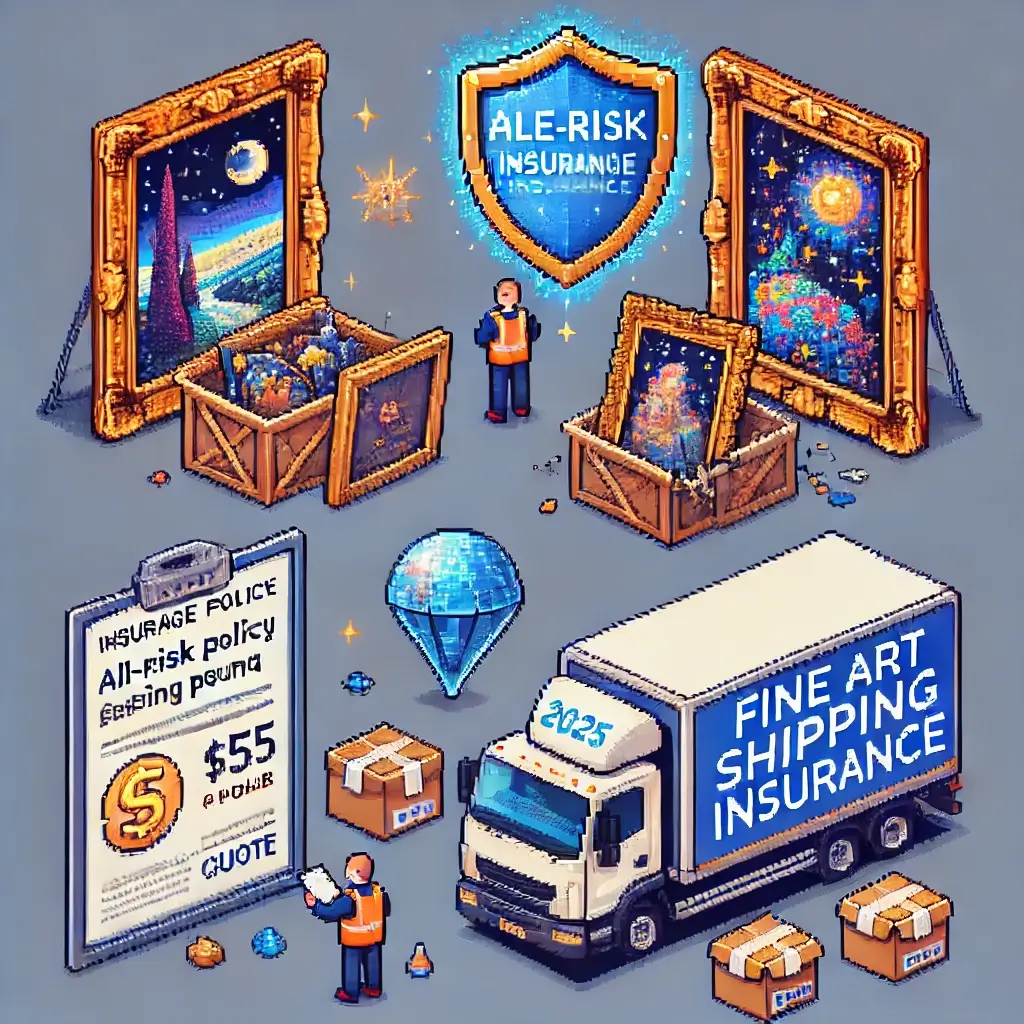
2025 Fine Art Shipping Insurance: Why You’re Probably Doing It Wrong
Listen up, fellow art lovers, collectors, and gallery owners. This isn’t your average, dry-as-dust insurance post. This is a raw, real-talk session about one of the most terrifying moments in the art world: watching a piece you love get loaded onto a truck, knowing its fate is now in the hands of a stranger and a whole lot of traffic. The sheer anxiety, the pit in your stomach—it’s a universal feeling. And if you’ve ever felt it, you’re in the right place. We’re going to dive deep into the murky, confusing, and surprisingly emotional world of fine art shipping insurance, and I promise you, by the end of this, you’ll feel a whole lot more in control. We’re not just talking policies; we’re talking about peace of mind. About protecting what you cherish. Because let’s be honest, that painting isn’t just canvas and paint; it’s a piece of your soul, a culmination of someone’s genius, and a whole lot of money. And frankly, a few bucks on insurance is a tiny price to pay for a good night’s sleep.
And let me be blunt: if you think the standard carrier’s liability coverage is enough, you’re playing with fire. It’s a gamble you’re almost guaranteed to lose. We’ve all seen the horror stories. That’s why we’re going to look at some real 2025 fine art shipping insurance quotes and tear them apart, piece by piece, so you can see exactly what you’re paying for and what you’re not. This isn’t about selling you something; it’s about empowering you with the knowledge to make smart decisions. Because your art deserves it. And so do you.
Are you ready? Let’s get into it. And please, grab a cup of coffee. This is going to be a long, but important, conversation.
Table of Contents
Why Your Current Fine Art Shipping Insurance Is a Bad Joke
Okay, let’s be honest with each other. The thought of shipping a valuable piece of art is enough to make anyone’s stomach churn. You’ve just acquired that stunning painting you’ve been dreaming of for years, or maybe you’re a gallery owner sending off a piece to a high-stakes exhibition. You pack it meticulously, wrap it like it’s a newborn baby, and then you hand it over to a shipping company. They give you a flimsy little piece of paper that says something about “standard liability.” You nod, maybe sign something you don’t really read, and hope for the best. That, my friends, is a gamble. A very, very bad gamble. It’s like buying a lottery ticket and expecting to win big, except instead of a few bucks, you’re risking a priceless masterpiece.
Let me tell you a story. A friend of mine, a brilliant sculptor, was shipping a large, fragile piece from his studio in Brooklyn to a gallery in Los Angeles. He thought he was being smart. He paid for the “extra” coverage the shipping company offered. It was a simple add-on, a few hundred bucks. The piece arrived shattered. Not chipped, not scratched, but completely, irrevocably shattered. The shipping company’s “extra” coverage? It only covered a fraction of the piece’s market value. It was a joke. A cruel, expensive joke. The sculptor was heartbroken, and financially devastated. He learned the hard way that carrier liability and real, comprehensive fine art shipping insurance are two completely different beasts. One is a band-aid; the other is a life-saving operation.
The problem is, most people don’t even know what questions to ask. They assume the shipping company has their best interests at heart. But their interests are getting the package from A to B as cheaply and efficiently as possible. Your interests are protecting an irreplaceable asset. These two goals are not always aligned. That’s why we have to take control of our own destinies here. We can’t rely on the kindness of strangers or the vague promises of a shipping company. We need to be our own advocates. We need to understand the fine print, the exclusions, the deductibles, and the all-important difference between an “all-risk” policy and a “named-peril” policy. And if that sounds like a foreign language to you, don’t worry. We’re going to break it all down, piece by piece, until it makes perfect sense.
The art world is a strange mix of passion and cold, hard business. You can’t let the passion blind you to the business side of things. Protecting your art is a crucial part of that business. It’s not just a boring chore; it’s an act of respect for the artist, for the art, and for your own investment. It’s a way of saying, “This is important. This is valuable. And I am not leaving it to chance.” So, let’s stop playing games. Let’s get serious about fine art shipping insurance. Your collection—and your sanity—will thank you for it.
Trust me when I say this: the few thousand dollars you spend on a proper fine art shipping insurance policy can save you hundreds of thousands, if not millions, down the line. It’s not an expense; it’s a strategic investment. A tiny, insignificant price to pay for a world of peace of mind. So let’s treat it that way. Let’s give it the respect it deserves. Because a broken piece of art isn’t just a financial loss; it’s a tragedy. And one that could have been completely avoided.
Think about the last time you bought a new phone. You probably got a case, right? Maybe a screen protector. Why? Because you know that even the most careful person can drop their phone. The same logic applies to art. The world is full of variables—a clumsy mover, a sudden pothole, a rogue storm. You can’t control any of that. But you can control what happens if something goes wrong. That’s the power of a solid fine art shipping insurance policy. It’s the ultimate safety net. It’s the difference between a minor setback and a complete disaster. So, let’s get this right, once and for all.
The Cold, Hard Truth About Fine Art Shipping Insurance and Why It Matters
Alright, let’s pull back the curtain on this whole insurance thing. The term “fine art shipping insurance” sounds so formal, so stuffy. But what it really boils down to is a simple concept: protecting something you love from the chaotic forces of the universe. It’s a shield. A metaphorical suit of armor for your precious cargo. But here’s the thing: not all shields are created equal. The standard coverage offered by most carriers is more like a flimsy plastic raincoat than a suit of armor. It offers minimal protection against a few very specific, and often unlikely, events.
For example, a lot of standard policies will cover things like “fire” or “total loss of the vehicle.” Great. But what about a simple drop? What about a careless bump? What about a sudden jolt that cracks a delicate sculpture? These are the real-world scenarios that are far more likely to occur, and yet, they are often explicitly excluded from a standard carrier’s liability policy. You might get a tiny payout based on the weight of the item—yes, you heard that right, the weight!—which is completely insane when you’re talking about a painting by a master. The value of art isn’t measured in pounds. It’s measured in history, in emotion, in market demand. This is why a dedicated fine art shipping insurance policy is not a luxury; it’s a necessity.
A proper policy will cover what’s known as “all-risk” coverage. This means it covers virtually any physical loss or damage, unless it’s specifically excluded. Think about the difference. With a standard policy, you have to prove that a specific event happened and that it was covered. It’s a battle. With an all-risk policy, the burden of proof is on the insurance company to show that the damage was caused by a specific exclusion. It’s a night and day difference. It’s the difference between a smooth claim process and a nightmare of paperwork, phone calls, and denial letters.
We’re talking about things like accidental damage, theft, and even changes in temperature or humidity that can cause irreparable damage to sensitive materials. You might think, “Oh, but my piece is going in a climate-controlled truck.” That’s wonderful. But what about the moments it’s being loaded? Or unloaded? What if the truck breaks down and the climate control goes out? A dedicated fine art shipping insurance policy considers these variables. It’s a proactive approach to risk management, not a reactive one. It’s about thinking through every possible scenario, no matter how remote, and having a plan in place. It’s the kind of meticulous planning that separates the amateurs from the professionals in the art world. And if you’re dealing with high-value art, you need to be a professional, even if you’re a private collector.
The bottom line is this: your art is an investment. Whether it’s a financial investment or an emotional one, it’s still an investment. And you would never, ever, let a financial investment be completely exposed to risk. You’d hedge, you’d diversify, you’d protect it. So why would you treat your art any differently? The art market is volatile, unpredictable, and sometimes brutal. But one thing you can control is how you protect your assets. A robust fine art shipping insurance policy is the cornerstone of that protection. Don’t be fooled by the low-cost alternatives. They are a trap. They are designed to give you a false sense of security while leaving you completely exposed. It’s better to pay a little more up front and have true peace of mind than to save a few bucks and lose everything in a moment of carelessness. Trust me, I’ve seen it happen. And it’s not a sight you ever want to witness.
And let’s not forget about the emotional value. The sentimental connection to a piece of art can be just as important as its monetary value. A painting you inherited from your grandmother, a sculpture that reminds you of a special trip, a piece that you bought to celebrate a major life event. These aren’t just things. They are memories. They are emotions. They are a part of your story. And the pain of seeing something like that damaged or lost is something that no amount of money can truly replace. But a fine art shipping insurance policy can, at the very least, provide some level of financial restitution, allowing you to maybe, just maybe, start a new collection or find a new piece that brings you joy. It’s a way of acknowledging that some things are priceless, but we still need a plan for when the worst happens. It’s a bitter pill to swallow, but a necessary one.
Decoding the Fine Art Shipping Insurance Jargon: A Layman’s Guide
Okay, I know what you’re thinking. “Jargon? Ugh, this is where my eyes glaze over.” I get it. Insurance language is designed to be confusing. It’s like a secret code that only a select few know how to decipher. But we’re going to crack that code together. Consider me your friendly, neighborhood insurance decoder ring. Let’s break down some of the most important terms you’ll encounter when you’re looking for fine art shipping insurance, so you can walk into that conversation with a carrier or a broker feeling confident, not clueless.
First up, and this is the big one: All-Risk vs. Named Perils. We touched on this before, but it bears repeating. Named Perils is what you’ll find on most standard shipping contracts. It’s a list. A boring, frustrating, and often woefully incomplete list of things they will cover. Fire, theft, collision, etc. If the damage doesn’t fit neatly into one of those categories, you’re out of luck. It’s like having a menu with only three options and being told you can only eat what’s on the menu. All-Risk, on the other hand, is the gold standard. It’s the “everything but the kitchen sink” policy. It covers all physical loss or damage from any external cause. The only exceptions are specific exclusions, which are clearly listed in the policy. We’re talking things like war, nuclear hazards, or… well, some policies might even exclude damage caused by your own gross negligence. The point is, with an all-risk policy, you are generally covered unless the damage was caused by one of those very specific, very unlikely events. It’s a huge psychological difference. It gives you the freedom to breathe a sigh of relief.
Next, let’s talk about Valuation. This is where things get really tricky. There are a few different ways an insurance company can value your art. There’s Actual Cash Value (ACV), which is the most common and the most dangerous. This is what you’ll see with most standard carrier policies. It’s the market value minus depreciation. Now, with a new iPhone, that makes sense. With a painting, it’s insane. Art doesn’t depreciate; it appreciates! Or at the very least, it holds its value. So if your piece is worth $10,000 and it gets damaged, they might look at the “age” of the piece and offer you a fraction of that. Not cool. What you want is Agreed Value or Stated Value coverage. This means you and the insurance company agree on the value of the piece before it’s shipped. If something happens, you get that agreed-upon amount. No arguments, no depreciation, no nasty surprises. It’s a simple, elegant solution to a very complex problem. It’s the only way to ensure you’re truly made whole in the event of a loss. And if you’re a gallery or a serious collector, this is the only type of valuation you should even consider. Anything else is a waste of time and a massive risk.
Then we have Exclusions. These are the things the policy will NOT cover. And trust me, you need to read these with a fine-toothed comb. Common exclusions for fine art shipping insurance might include: damage due to a pre-existing condition (e.g., a crack that was already there), damage due to natural wear and tear, or damage caused by improper packing (this is a big one!). This is why working with a reputable fine art shipper is so important. They know how to pack and crate art to industry standards, which protects both you and the policy. It’s a symbiotic relationship. And you need to make sure your insurance policy doesn’t have a bunch of sneaky, unreasonable exclusions that would make it impossible to file a claim. If it seems too good to be true, it probably is. A cheap policy often has a laundry list of exclusions that make it practically worthless.
And finally, Deductibles. This is the amount of money you have to pay out-of-pocket before the insurance company starts paying. A higher deductible usually means a lower premium, and vice versa. It’s a balancing act. You have to decide what level of risk you’re comfortable with. If you’re shipping a very expensive piece, you might be willing to take a higher deductible to lower your monthly costs. But if you’re shipping multiple pieces a year, a lower deductible might make more sense. It’s a personal decision, but it’s one you should make consciously, not just accept blindly. Don’t let the numbers scare you. They are just a part of the puzzle. Once you understand what each piece means, you can put the whole picture together. And that picture is one of a solid, reliable, and trustworthy fine art shipping insurance policy that protects your valuable assets and gives you the peace of mind you deserve.
And one more thing, let’s talk about Certificates of Insurance (COI). When you’re dealing with a reputable art handler or a gallery, they will often ask for a COI from your insurance provider. This isn’t just a bureaucratic formality. It’s a way of proving that you have a valid, active policy that meets their standards. It’s a sign that you’re a serious player in the art world. So, don’t be surprised when you’re asked for one. It’s a good thing. It’s a sign that everyone involved is taking the protection of your art seriously. And that’s exactly what you want.
So, there you have it. The secret code of fine art shipping insurance, now cracked wide open for you. Don’t let these terms intimidate you anymore. They are just words, and now you know what they mean. Use this knowledge to your advantage. Ask the right questions. Demand the right coverage. And don’t settle for anything less than what your art deserves.
2025 Fine Art Shipping Insurance: Let’s Look at the Numbers
Alright, enough with the philosophy and the jargon. Let’s get down to brass tacks. You came here for a 2025 fine art shipping insurance quote comparison, and I’m going to give you some real-world examples. Now, remember, these are just examples. Your specific situation will vary based on the value of the art, the distance it’s being shipped, the type of art, and your own claims history. But these examples will give you a solid idea of what to expect and what questions to ask when you’re getting your own quotes. This is where we put all the pieces we just learned together.
Let’s imagine you’re a private collector in New York City, and you’ve just purchased a beautiful $100,000 painting from a gallery in Los Angeles. It’s a medium-sized piece, 48×60 inches. You have three options for shipping:
Option 1: The Standard Carrier (e.g., a large, well-known logistics company)
They offer their standard liability coverage, which is usually a tiny fraction of the value. For this kind of piece, they might offer coverage of, say, $5 per pound. If the crated painting weighs 50 pounds, that’s a whopping $250 in coverage. Total cost for shipping and “insurance” might be around $1,500. Now, you can probably add on a little more, but it’s still going to be a “named perils” policy, and the cap will be a fraction of the painting’s value. Cost: ~$1,500. Coverage: Inadequate.
Option 2: The Art-Specialized Shipper with All-Risk Coverage
This is a company that specializes in moving fine art. They have climate-controlled trucks, trained handlers, and they know the intricacies of handling delicate pieces. They offer an all-risk, agreed-value policy. For a $100,000 piece, the insurance premium might be a percentage of the value, say, 0.5% to 1.5%. So, the premium would be somewhere between $500 and $1,500. The total shipping and insurance cost might be around $3,000 to $4,000. Cost: ~$3,000-$4,000. Coverage: Comprehensive.
Option 3: A Standalone Fine Art Insurance Policy (Broker)
This is for the savvy collector. You hire a specialized art shipping company just for the logistics and get your own policy from a reputable insurance broker. The shipping might cost around $2,500. The standalone insurance policy for a single trip might be a bit higher than what the specialized shipper offers, say, 1.5% to 2% of the value, but it’s often more customizable and has fewer exclusions. So, the premium would be between $1,500 and $2,000. Total cost: ~$4,000-$4,500. Cost: ~$4,000-$4,500. Coverage: Highly Customizable and Robust.
Do you see the massive difference here? The cheapest option gives you almost no real protection. It’s a placebo. The more expensive options, while they seem like a lot more up front, are actually a bargain when you consider the value of the asset you’re protecting. It’s the difference between buying a cheap padlock for your front door and installing a state-of-the-art security system. One might deter a casual thief, but the other will protect you from a serious threat. Your art is a serious threat—to your wallet, to your peace of mind, to your sanity—if you don’t protect it properly.
And let’s be real, the numbers can be overwhelming. But let’s put it into perspective. If you’re a gallery, and you’re shipping $1,000,000 worth of art for an exhibition, the insurance premium might be $15,000. That sounds like a lot. But what if one of those pieces, a $200,000 painting, gets damaged? Without the right insurance, you’ve just lost that entire amount, and you’ve probably lost a client and a reputation. With the right fine art shipping insurance, you get your money back, the artist gets a new canvas to work on, and your reputation remains intact. It’s not a cost; it’s a strategic business decision. It’s the cost of doing business in a high-stakes industry. And if you’re not willing to pay it, maybe you shouldn’t be in the business at all.
So, when you’re getting quotes, don’t just look at the bottom line. Look at the fine print. Ask them what’s covered. Ask them what’s NOT covered. Ask them about their claims process. A good insurance company will have a clear, easy-to-understand claims process. A bad one will be vague and evasive. You want to feel confident that if something goes wrong, you won’t have to fight a long, drawn-out battle just to get what you’re owed. This is a very real, very emotional part of the process, and you need to choose a partner who understands that. Someone who gets it.
And I can’t stress this enough: always get multiple quotes. Never, ever just go with the first one you get. Just like you’d compare prices for a car or a new television, you need to compare quotes for fine art shipping insurance. The market is competitive, and you’d be surprised at the variation in price and coverage. A little bit of due diligence here can save you a lot of money and a lot of headaches. It’s an important step. Don’t skip it. Your future self will thank you for being so diligent. It’s the kind of small, smart decision that can have a massive impact down the line.
The Emotional Toll of Shipping Without Proper Fine Art Shipping Insurance
I want to take a moment and talk about something that gets overlooked far too often in these kinds of conversations: the emotional toll. We talk about money, we talk about policies, we talk about logistics. But what we don’t talk about is the gnawing anxiety that comes with shipping a piece of art without the right fine art shipping insurance. The constant checking of the tracking number, the imaginary scenarios of what could go wrong, the feeling of helplessness as your precious piece is in a truck somewhere on a highway you’ve never seen. It’s an awful feeling. It’s like watching a child go on a long, dangerous journey without a map or a safety harness. You just feel… sick.
I’ve seen it firsthand. A gallery owner I know once shipped a very, very valuable piece to a client without getting a proper standalone policy. The carrier offered some basic liability, and the gallery owner, in a rush, just accepted it. The piece arrived with a significant crack in the frame and a small, but noticeable, scratch on the canvas. The carrier said, “Oops, our bad. Here’s a few hundred dollars based on the weight.” The client was furious. The gallery owner was beside himself. Not only was he out the value of the piece, but he had a very angry, very influential client on his hands. The relationship was shattered. And all because he tried to save a few thousand dollars. The emotional and professional damage was far greater than the financial loss. It was a complete disaster.
And it’s not just about the big, dramatic losses. It’s about the small, daily anxieties. That feeling you get when you see a news report about a multi-car pileup on the highway your art is on. The instant panic, the sudden cold sweat. That’s a very real thing. That’s a feeling that proper fine art shipping insurance can completely eliminate. It’s the difference between a restless night and a sound night’s sleep. It’s the difference between hoping for the best and knowing you’re covered for the worst. It’s the difference between anxiety and peace of mind.
Let’s use a metaphor. Think of your art as a baby. You would never, ever, send a baby on a cross-country trip with a babysitter you found on a random website and no safety plan. You’d vet the babysitter, you’d get a car seat, you’d probably even put a little tracking device in their diaper bag. You’d do everything in your power to ensure their safety. Why would you treat your art any differently? The monetary value is just one part of the equation. The emotional value is just as important, if not more so. And you owe it to yourself to protect that.
A good fine art shipping insurance policy is a way of acknowledging the deep, personal connection you have to your art. It’s a way of saying, “I see you. I value you. And I will protect you.” It’s a very human thing to do. And in a world that can be so cold and transactional, this is one area where you can inject a little bit of humanity, a little bit of care, and a little bit of foresight. Don’t be a statistic. Don’t be the next horror story that someone tells at a cocktail party. Be the person who planned ahead. Be the person who made the smart, emotionally mature decision. Be the person who knew the value of peace of mind. Your heart—and your bank account—will thank you for it.
The art world is full of risk. There’s the risk of buying a piece that doesn’t appreciate, the risk of a market downturn, the risk of a new artist not getting the recognition they deserve. But shipping risk is one of the few risks you can almost completely eliminate with a simple, well-thought-out plan. It’s a controllable variable in a world full of uncontrollable ones. So why wouldn’t you control it? Why would you leave it up to chance? It just doesn’t make any sense. It’s a risk that is not worth taking, and it’s a feeling that is not worth having. It’s a pit in your stomach you don’t need. So, let’s get rid of it. Let’s get you the right coverage. Let’s make sure you can ship your art with a smile on your face, not a knot in your stomach.
FAQ: Your Burning Questions About Fine Art Shipping Insurance Answered
I’ve gotten a lot of questions about this topic over the years, and I want to answer some of the most common ones right here. Think of this as a mini, rapid-fire Q&A session. No fluff, just the answers you need.
Q1: Is it worth getting a standalone fine art shipping insurance policy even if my shipper offers their own coverage?
A1: Absolutely, unequivocally, yes. As we’ve discussed, the carrier’s coverage is almost always inadequate. It’s based on weight, it’s named-perils, and it’s full of exclusions. A standalone policy is often all-risk, agreed-value, and tailored to your specific needs. It’s the difference between a placeholder and a real solution. It’s the smart, professional way to handle things.
Q2: What’s the biggest mistake people make with fine art shipping insurance?
A2: Thinking that it’s an unnecessary expense. They see the quote and think, “I’ll just save the money, what are the odds of something going wrong?” The odds are higher than you think, and the cost of a mistake is astronomically higher than the cost of the policy. It’s a classic case of being penny-wise and pound-foolish. Don’t do it. Just don’t.
Q3: Do I need a professional appraisal to get a fine art shipping insurance policy?
A3: For high-value pieces, yes. For lower-value pieces, a recent sales receipt or a letter from the gallery or artist might suffice. But for anything over, say, $50,000, a professional appraisal is usually required, and it’s always a good idea. It establishes the agreed-upon value and makes the claims process a whole lot smoother. It’s a small investment that pays off big time in the long run. Don’t skip this step. It’s crucial for getting the right fine art shipping insurance.
Q4: How do I find a reputable fine art insurance broker?
A4: Start by asking for recommendations from other collectors, galleries, or art advisors you trust. Look for brokers who specialize in fine art. They will have a deep understanding of the unique risks involved and will have access to policies from top-tier underwriters. Do a little digging online, check out their reviews, and make sure they are well-regarded in the industry. It’s not a decision you should make lightly. You’re building a relationship with someone who will be there for you when things go wrong, and you want that person to be an expert you can trust completely. Look for someone who can help you with your fine art shipping insurance and all your art-related insurance needs.
Q5: What’s the most common reason for a fine art shipping insurance claim denial?
A5: Improper packing. This is a huge one. If you’re not a professional, you should not be packing a valuable piece of art. Hire a reputable fine art packing and crating company. They know the right materials, the right techniques, and the right standards. A lot of policies have an exclusion for damage caused by improper packing, and it’s a very easy way for an insurance company to deny a claim. Don’t give them an out. Do it right the first time. It’s worth every single penny. This is a key part of your fine art shipping insurance strategy.
Q6: Are there special policies for art fairs and exhibitions?
A6: Yes! Many brokers offer specialized policies for exhibitions. These are often called “wall-to-wall” policies and they cover the art from the moment it leaves your location until the moment it returns, including transit, handling, and display at the venue. If you’re a gallery or an artist, this is a must-have. Don’t rely on the fair’s insurance, as it’s often a general policy that might not cover your specific needs. Get your own coverage. It’s the only way to be truly safe. And this kind of fine art shipping insurance is a must for any serious professional.
Q7: What’s the difference between a Certificate of Insurance (COI) and a policy?
A7: A policy is the actual contract that details the coverage, terms, and conditions. A Certificate of Insurance is a summary document that proves you have a valid policy in place and is usually sent to a third party (like a gallery or a museum) to verify coverage. Think of the policy as your entire passport, and the COI as a stamp on a single page, showing you’ve been through a specific process. The COI is a simple proof of your fine art shipping insurance.
Q8: Can I get insurance for a piece that is being shipped internationally?
A8: Yes, absolutely. International shipping has its own set of complexities, including customs regulations, different modes of transport, and longer transit times. A good fine art insurance broker will have experience with international shipments and can tailor a policy to cover the entire journey, from origin to destination, including any potential layovers or storage periods. Don’t even think about shipping internationally without a robust, all-risk, door-to-door fine art shipping insurance policy.
Q9: What happens if a piece is damaged and I don’t have insurance?
A9: If the damage is the carrier’s fault and they have some sort of liability coverage, you might get a tiny fraction of the value. But you’ll have to fight for it, and the amount will be based on weight, not value. If the damage isn’t the carrier’s fault, you get nothing. The loss is entirely on you. It’s a complete financial and often emotional disaster. This is the scenario we are trying to avoid at all costs. This is why fine art shipping insurance is not an option; it’s a requirement.
Q10: What if my art is being shipped by the artist themselves?
A10: The same rules apply. Even if the artist is doing the shipping, you need to have a conversation about insurance. Who is responsible for what? Is the artist’s studio insurance covering it? Does your own policy cover it? Don’t make assumptions. Get it in writing, and make sure a proper fine art shipping insurance policy is in place. The artist might be brilliant, but they are probably not an expert in logistics and insurance. This is a partnership, and you both need to be on the same page.
The Infographic: A Visual Guide to Fine Art Shipping Insurance
Sometimes, all this information can be a bit overwhelming. So I created a little infographic to help you visualize the most important points. Think of it as a cheat sheet you can save and refer to later. It’s a quick, easy way to remember the key differences between bad coverage and great coverage, and why you should always, always, go for the latter. It’s a simple, visual representation of the fine art shipping insurance concepts we’ve been talking about.
The Fine Art Shipping Insurance Checklist: All-Risk vs. Named Perils
Named Perils Policy (The Bad Choice):
- Coverage: Limited to a specific, short list of events (fire, theft, etc.).
- Valuation: Often based on weight, not actual value.
- The Feeling: Constant anxiety.
- Outcome: High risk of significant financial loss.
All-Risk Policy (The Smart Choice):
- Coverage: Covers virtually all physical loss or damage, unless specifically excluded.
- Valuation: Agreed-upon value, guaranteeing you get paid what the art is worth.
- The Feeling: Complete peace of mind.
- Outcome: Protection against the unexpected and financial security.
Key Questions to Ask Your Fine Art Shipping Insurance Broker
- Is the policy “All-Risk” or “Named Perils”?
- Is the valuation based on “Agreed Value”?
- What are the specific exclusions in the policy?
- What is the claims process like, and how long does it typically take?
- Does the policy cover temporary storage or display?
See? Simple, right? The more you know, the more in control you feel. And when you’re dealing with something as valuable as art, control is everything. This little infographic can be your guiding light in the confusing world of fine art shipping insurance.
Beyond the Numbers: My Personal Fine Art Shipping Insurance Experience
I want to end this by telling you a personal story. It’s not a tale of a disaster, but a story of a near-miss, and how it completely changed my perspective on fine art shipping insurance. I was shipping a piece from a gallery in London to my home in New York. It was a piece I had coveted for a very long time, and I was so excited to finally have it. I went with a reputable art shipper, and I paid for their full, all-risk, agreed-value coverage. It was not cheap. I remember looking at the quote and thinking, “Wow, that’s a lot of money just for insurance.” But I did it anyway, because a little voice in my head told me to. That little voice, by the way, is usually right. So I signed the papers, paid the premium, and a week later, the piece was on its way across the Atlantic.
About a day into the journey, I got a call from the shipping company. There had been a fire in the cargo hold of the plane. A small fire, but still a fire. The plane had to make an emergency landing in Iceland. The art was fine, completely untouched, but for a few terrifying hours, I had no idea. The shipping company was amazing. They were in constant contact, they had a team on the ground ready to assess the situation, and they assured me that no matter what, the piece was fully covered. I wasn’t just hearing a platitude. I was hearing the voice of a professional who knew they had me covered. The piece eventually made it to New York, safe and sound, about a week late. And I remember opening the crate and just… breathing. It wasn’t about the money at that point. It was about the fact that I had done everything I could to protect it. It was about the peace of mind. The feeling that even when things went horribly wrong, I had a safety net. I had done the right thing. And that feeling is worth every single penny.
That experience taught me something profound. Fine art shipping insurance isn’t just a financial instrument. It’s a psychological one. It’s a way of saying, “I’ve done my due diligence. I’ve planned for the worst. Now, I can let go and just enjoy the journey.” It’s a liberation. It frees you up from the worry and allows you to focus on the joy of art. The joy of collecting, the joy of showing, the joy of living with beautiful things. And that’s what this is all about, isn’t it? It’s not about the money. It’s about the art. And protecting it is the first step to truly appreciating it. So, don’t skimp. Don’t cut corners. Do it right, and do it for yourself. Your collection deserves it. And you deserve to sleep soundly at night, knowing that no matter what, your art is safe. This is the ultimate lesson of fine art shipping insurance.
I know this has been a long post. I know it’s a lot of information to take in. But I hope you feel a little more empowered, a little more knowledgeable, and a lot more confident about navigating the world of fine art shipping insurance. It’s not a chore. It’s an investment. It’s a statement. And it’s the only way to truly protect the things you love. Thank you for reading. And happy collecting. May all your shipments arrive safely.
A Final Word of Warning on Fine Art Shipping Insurance
Just one last thing before I let you go. The internet is full of “quick and easy” solutions. Be very, very wary of them. When it comes to something as complex and valuable as fine art, you want to deal with real people, real experts. You want to talk to a person on the phone, someone who can answer your questions and understand your specific situation. You don’t want to just click a button and hope for the best. The world of fine art is built on relationships, on trust, and on expertise. Your insurance should be no different. Don’t let an algorithm decide the fate of your priceless masterpiece. Talk to a professional. Get a real quote. And make sure you are fully, truly, completely covered. It’s the only way to be safe. And it’s the only way to show the art the respect it deserves. This is the most important piece of advice I can give you on fine art shipping insurance.
And now, a few helpful external links to get you started on your journey. These are places you can go to find real, trustworthy information and potential partners in this important process. These are not endorsements, but they are a good starting point for your research. They can help you with your fine art shipping insurance needs.
Now, go forth and protect your art. You know what to do.
Keywords: Fine Art Shipping Insurance, Art Insurance, 2025 Quote, Fine Art Transport, All-Risk Policy
🔗 Shade-Tolerant Container Plants Posted 2025-08-23 15:24 UTC 🔗 Minimalist Packing for Digital Nomads Posted 2025-08-22 10:04 UTC 🔗 17th Century Maps Posted 2025-08-22 09:19 UTC 🔗 Diagnosis Thru-Hiking with a Chronic Condition Posted 2025-08-21 12:00 UTC 🔗 Sportbike Track Day Posted 2025-08-21