
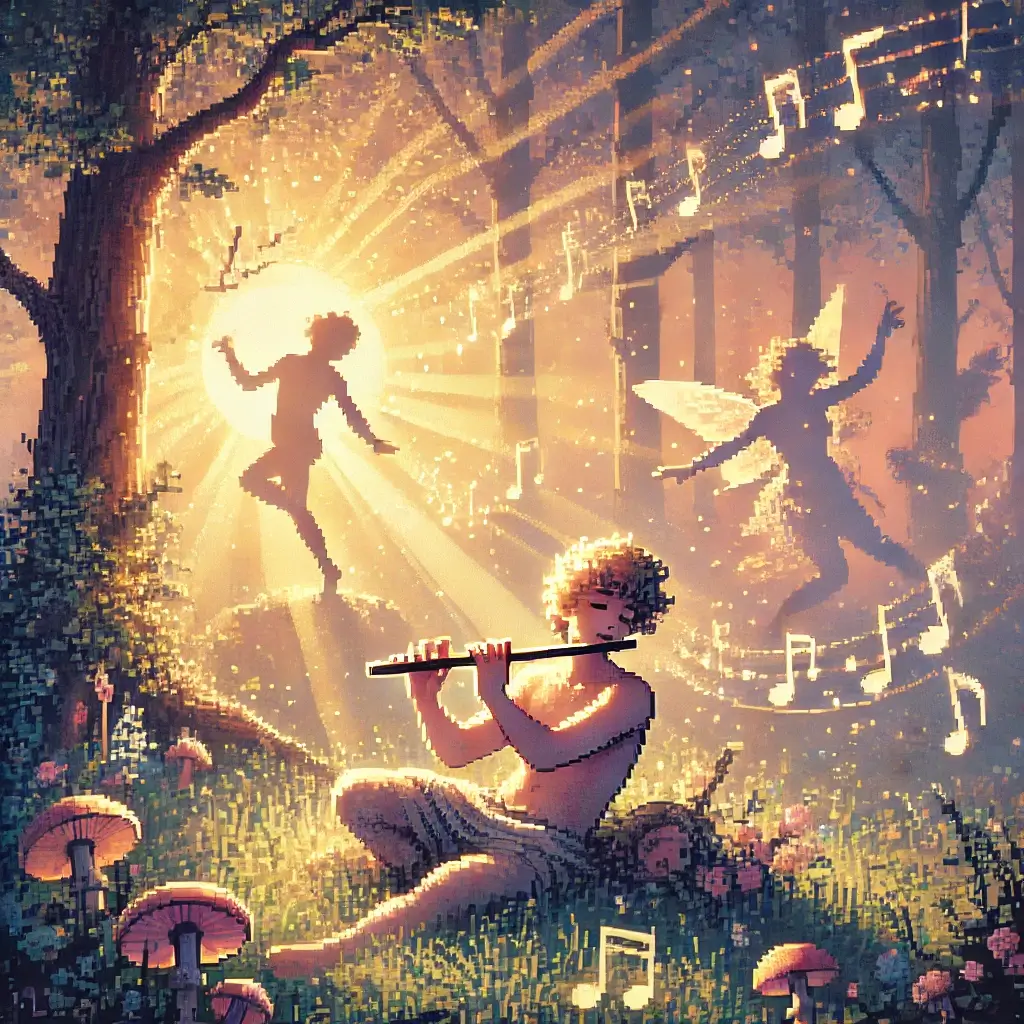
1 Dreamy Afternoon, 1 Revolutionary Faun: Debussy’s Masterpiece Unveiled!
Oh, the sheer magic of it! Have you ever found yourself utterly lost in a piece of music, transported to another realm, feeling as if the very air around you has shifted? That’s exactly the kind of spell Claude Debussy’s “Prélude à l’après-midi d’un faune” casts.
It’s not just a piece of music; it’s an experience, a whisper of a dream, a shimmering mirage of sound that forever changed the landscape of classical music.
We’re talking about a composition so profoundly influential, so breathtakingly beautiful, that it practically invented a whole new way of listening.
If you’ve ever felt the sun on your skin, watched light dance through leaves, or simply drifted off into a reverie, then you’ve already felt the essence of this “Prelude to the Afternoon of a Faun.”
So, settle in, dear reader, because we’re about to embark on a delightful journey into the heart of one of the most enchanting and pivotal works in music history.
Trust me, it’s going to be an afternoon well spent! —
Table of Contents
—
Awakening to a New Sound: What Makes This Piece So Special?
Imagine being a music lover in the late 19th century.
You’re used to the grand, dramatic gestures of Romanticism, the soaring melodies, the clear-cut harmonies, the emotional rollercoaster rides of Brahms, Tchaikovsky, and Wagner.
Then, along comes Debussy with this:
A hesitant, almost shy flute melody, drifting in and out, not quite leading anywhere definitive, but everywhere at once.
It’s like a dream you’re trying to grasp, just out of reach, yet its feeling lingers.
That, my friends, is the magic.
What makes “Prélude à l’après-midi d’un faune” (or “Prelude to the Afternoon of a Faun,” for us English speakers) so utterly special isn’t just its beauty, though it has that in spades.
It’s its *revolutionary* nature.
Debussy wasn’t just writing music; he was *reimagining* what music could be.
He broke free from the shackles of traditional harmony and structure, opting instead for atmosphere, color, and suggestion.
It’s less about a story with a clear beginning, middle, and end, and more about a mood, a sensation, a fleeting impression.
Think of it as the musical equivalent of an Impressionist painting – not a sharp, detailed photograph, but a shimmering canvas of light and shadow, where every brushstroke contributes to an overall feeling rather than a precise depiction.
This piece truly opened the door to modern music, whispering possibilities that composers for generations would explore. —
The Birth of a Faun: A Glimpse into its Origins
Every masterpiece has its genesis, and the Faun’s prelude is no exception.
Claude Debussy, a brilliant and somewhat reclusive French composer, began working on this piece in 1892, premiering it in 1894.
It was inspired by a poem, a truly evocative and sensual work by his contemporary, Stéphane Mallarmé, titled “L’après-midi d’un faune.”
Now, Mallarmé’s poem itself is a fascinating creature.
It’s a monologue by a faun, a mythical creature – half-man, half-goat – who has just awoken from a dreamlike afternoon nap.
He’s trying to recall whether he actually encountered nymphs, or if it was all just a beautiful, erotic hallucination.
The poem is filled with languid imagery, hazy memories, and a sense of tantalizing ambiguity.
Debussy, being the genius he was, didn’t set out to literally “tell the story” of the poem in music.
Oh no, that would have been far too pedestrian for him!
Instead, he captured its *essence*, its *mood*, its *sensuality*.
He once famously said he wanted the music to be “a very free illustration” of the poem, focusing on “the successive scenes through which the desires and dreams of the faun pass in the heat of the afternoon.”
And boy, did he succeed!
He didn’t need to depict every rustle of leaves or every glimpse of a nymph.
He simply created the *feeling* of those things, allowing our imaginations to fill in the details.
It’s a testament to his understanding of atmosphere over narrative. —
More Than Just Notes: The Story Behind the Music
So, what *is* the “story” if it’s not a direct translation of the poem?
Well, if you must have a narrative, think of it as a journey through a dream.
The opening flute, played solo and without clear meter, immediately plunges us into this hazy, timeless world.
It’s the faun, perhaps, just waking up, a little disoriented, his thoughts still swirling with the visions of his dream.
The music unfolds in waves, sometimes rising in passion, suggesting the faun’s longing or the fleeting appearance of the nymphs.
Other times, it recedes into tranquility, like the afternoon heat settling over the landscape, or the faun drifting back into a blissful slumber.
There’s a central theme, a yearning melody, that reappears throughout the piece, transformed and reharmonized, reflecting the faun’s persistent, elusive desires.
It’s a masterclass in mood painting, using rich orchestral colors – particularly the woodwinds and harp – to evoke the sun-drenched pastoral setting.
You can almost feel the dappled sunlight, smell the wildflowers, and hear the gentle buzz of insects as the music unfolds.
Debussy doesn’t force a story upon you; he invites you to create your own within his sonic landscape.
That’s the beauty of it – it’s deeply personal, yet universally felt. —
Impressionism in Sound: Painting with Tones
If you’ve ever gazed at Monet’s water lilies or Degas’s ballerinas, you have a pretty good idea of what musical Impressionism is all about.
Just as these painters moved away from sharp lines and realistic depictions to focus on light, color, and atmosphere, Debussy (though he disliked the term “Impressionist” applied to his music) did the same with sound.
He was less interested in traditional Western musical structures like sonata form or clear-cut cadences that resolve neatly.
Instead, he explored:
- New scales: He frequently used the whole-tone scale (where every note is a whole step apart, creating a dreamy, non-directional sound) and the octatonic scale, which further blurred traditional tonality.
- Unusual harmonies: Chords didn’t always function in the traditional “pulling-towards-a-resolution” way.
They were often stacked in new ways, like parallel chords, creating shimmering, almost static blocks of sound that evoked color and texture.
Think of it like different shades of paint blended together.
- Orchestral color: Debussy was a master orchestrator.
He used individual instruments like a painter uses individual colors on a palette.
The flute, oboe, clarinet, and harp are given moments to shine, not just as part of a collective sound, but for their unique timbres, creating specific effects – the reedy, mysterious flute, the languid oboe, the shimmering harp glissandos.
- Rhythmic fluidity: The rhythm often feels free, unmetered, almost improvisatory, much like a dream.
There’s a sense of ebb and flow, rather than a strong, driving pulse.
All these elements combined create a sound world that is incredibly evocative, sensuous, and completely immersive.
It’s like diving into a warm, sun-dappled pool where the boundaries between reality and dream gently dissolve. —
A Deep Dive: Unpacking the Musical Genius
Let’s roll up our sleeves and get a little technical, but don’t worry, I promise it won’t be like a stuffy music theory class!
The “Prelude” is only about 10-11 minutes long, but every second is packed with ingenious musical decisions.
The iconic opening, for example: a lone flute, playing a sinuous, chromatic melody.
It’s not in a clear key, and its rhythm is wonderfully ambiguous.
This immediately sets the tone for the entire piece – dreamy, elusive, and utterly captivating.
Debussy masterfully employs what are called “non-functional harmonies.”
This means chords aren’t just there to lead to the “next” chord in a predictable way.
Instead, they’re chosen for their pure sound, their color, their ability to evoke a specific mood.
Think of it like choosing colors for a painting based on how they look next to each other, not because they “have” to go there according to some rule book.
He uses parallel motion (chords moving up and down together) which creates a shimmering, ethereal effect, and avoids strong, decisive cadences, keeping the music always in a state of gentle suspension.
The orchestration is another stroke of genius.
Debussy uses a relatively small orchestra but extracts an astonishing variety of sounds from it.
The shimmering strings, the reedy woodwinds, the subtle brass, and the glistening harp all contribute to a rich tapestry of sound.
He often “doubles” melodies in different instruments, creating unique blends and textures.
For instance, the main theme might be played by the oboe, then echoed by the clarinet, creating a sense of dialogue and subtle transformation.
And let’s not forget the form!
It’s not a traditional sonata or rondo form.
Instead, it’s more like an ABA’ structure, but with such fluid transitions and transformations that it feels organic, like a plant growing naturally, rather than a rigidly constructed building.
The themes develop and evolve, rather than simply repeating.
It’s a testament to his belief that music should be “a free art, gushing forth, a music of the open air, limitless as the wind, the sky, the sea.” —
The World Reacts: From Scandal to Symphony Hall Staple
When “Prélude à l’après-midi d’un faune” premiered in 1894, it wasn’t a universal embrace.
Some critics and audience members were utterly bewildered.
They were used to the musical “meals” of the Romantics, full of hearty themes and clear resolutions.
Debussy’s “amuse-bouche” of atmosphere and suggestion left some feeling unsatisfied, or perhaps, just confused.
One prominent critic, Camille Bellaigue, famously called it “a beautiful mistake” and questioned its lack of clear form.
He was looking for the old signposts and couldn’t find them.
However, others, especially fellow artists and forward-thinking musicians, immediately recognized its profound originality and beauty.
Stéphane Mallarmé himself, after hearing the piece, wrote to Debussy, saying, “I do not believe there could be any other impression on the whole more than your music. It floats, full of nuance, with voluptuous languor, and glides back to the original text with a final kiss.”
Talk about a glowing review from the source!
It was a slow burn, but “Prelude to the Afternoon of a Faun” gradually gained recognition and admiration.
Its influence quickly spread, inspiring composers across Europe and America to explore new harmonic and textural possibilities.
It didn’t take long for it to become a staple of orchestral repertoire, a piece that conductors loved to program for its sheer beauty and its ability to showcase the subtle colors of the orchestra.
It truly went from being a piece that challenged audiences to one that enchants millions. —
Beyond the Faun: Its Enduring Legacy and Influence
It’s no exaggeration to say that “Prélude à l’après-midi d’un faune” threw a musical grenade into the complacent world of late Romanticism.
Its impact reverberated for decades, shaping the course of 20th-century music.
Think about it:
- It paved the way for modernism: By breaking free from traditional tonality and narrative, Debussy opened the floodgates for composers like Stravinsky, Schoenberg, and later, even jazz musicians, to experiment with new sounds, rhythms, and structures.
- Inspired new forms of expression: The ballet world, in particular, was captivated.
Vaslav Nijinsky choreographed a famously scandalous and groundbreaking ballet to the music in 1912, which further cemented the piece’s place in cultural history.
This fusion of music, dance, and avant-garde art was revolutionary.
- Changed orchestration: Composers began to pay more attention to individual instrumental colors and textures, moving away from the dense, unified sound of the Romantic orchestra.
Debussy’s subtle, transparent scoring became a model for future generations.
- Influenced film scores: The evocative, atmospheric quality of Debussy’s music, especially this piece, laid groundwork for how composers approach film scores today.
It’s about creating a mood, enhancing emotion, and suggesting ideas without being overly explicit – perfect for the silver screen.
Every time you hear a film score that uses subtle textures and harmonies to build atmosphere, or a piece of contemporary classical music that prioritizes sound color over traditional melody, you’re hearing the echoes of Debussy’s revolutionary Faun.
It truly is one of those cornerstone works that artists constantly return to for inspiration. —
How to Truly Listen: Unlocking the Faun’s Secrets
Alright, now that you know the backstory and the technical wizardry, how do you actually *listen* to this piece to get the most out of it?
My advice? Don’t try too hard!
Seriously, don’t sit there trying to count beats or identify every theme.
Instead, let it wash over you like a warm, lazy afternoon.
Here are a few tips, from one music lover to another:
- Find a quiet space: Turn off distractions.
- Put on some good headphones.
- Let your mind clear.
- Close your eyes: This helps you focus purely on the sounds and allows your imagination to take flight.
What do you see? What do you feel?
- Embrace the ambiguity: Don’t try to force a narrative onto it.
Allow the music to suggest feelings, colors, and images without needing a concrete story.
It’s about atmosphere, not plot.
- Notice the instruments: Listen to how Debussy highlights individual instruments.
The flute, of course, is paramount.
But also listen for the gentle swell of the strings, the reedy calls of the oboe and clarinet, the shimmering glissandos of the harp.
Each contributes a unique color.
- Feel the ebb and flow: The music swells and recedes, much like waves on a shore or breaths in a deep slumber.
Allow yourself to drift with it.
It’s a journey, but one without a fixed destination.
And if, after all that, you find yourself feeling a little dreamy, a little enchanted, a little bit like you’ve just woken from a truly delightful nap in a sun-dappled glade, then you’ve absolutely nailed it.
That’s the magic of the Faun. —
The Faun Lives On: Why It Still Captivates Us 130 Years Later
It’s been over 130 years since Debussy unleashed his Faun upon the world, and yet, its power hasn’t diminished one iota.
Why do millions still flock to hear it in concert halls, stream it online, and fall under its spell?
I think it comes down to a few things:
- Timeless Beauty: Some things are just universally beautiful, and this piece is one of them.
Its harmonies are lush, its melodies evocative, and its atmosphere is utterly enchanting.
It appeals to something deep within us, a desire for beauty and escape.
- Emotional Resonance: Even without a clear story, the music evokes powerful emotions – longing, sensuality, mystery, tranquility, and a touch of wistful melancholy.
These are feelings we all experience, making the music deeply relatable.
- An Escape: In our increasingly noisy and hectic world, Debussy’s Faun offers a precious commodity: an escape.
It transports us to a realm of peace, beauty, and imagination, a much-needed respite from the everyday grind.
- Enduring Mystery: Like the faun himself, the piece retains an air of mystery and ambiguity.
It never quite gives up all its secrets, inviting repeated listens and new discoveries every time.
It’s like a beloved old book you can return to again and again, finding new layers each time.
So, there you have it.
Claude Debussy’s “Prélude à l’après-midi d’un faune” isn’t just a historical curiosity; it’s a living, breathing work of art that continues to enchant, inspire, and transport us.
If you haven’t given it a proper listen, now’s your chance!
You might just find yourself discovering a new favorite afternoon companion.
For more insights and to explore the world of Debussy and classical music, check out these fantastic resources:
Discover Impressionism in Music
Debussy, Impressionism, Faun, Orchestra, Masterpiece