
12 Angry Men: A DOZEN Voices, ONE Verdict, and a FURY of Justice!
Have you ever walked out of a movie theater and felt like your brain had just been put through a wringer, in the best possible way? That’s precisely the experience you’ll have with 12 Angry Men, the 1957 cinematic masterpiece that proves you don’t need explosions, car chases, or elaborate special effects to tell a story that will stick with you for a lifetime. All you need is a room, 12 ordinary men, and a life hanging in the balance.
Seriously, folks, this isn’t just a film; it’s a masterclass in human nature, a deep dive into the messy, complicated, and utterly fascinating process of justice. It’s a stark reminder that what we see isn’t always the truth, and that sometimes, all it takes is one person to challenge the status quo and ignite a furious debate that changes everything. If you haven’t seen it, stop reading right now (well, finish this first, then go watch it!). You’re missing out on a piece of cinematic history that’s as relevant today as it was nearly 70 years ago. —
Table of Contents
—
The Shocking Power of 12 Angry Men: Why This Film Still Slays!
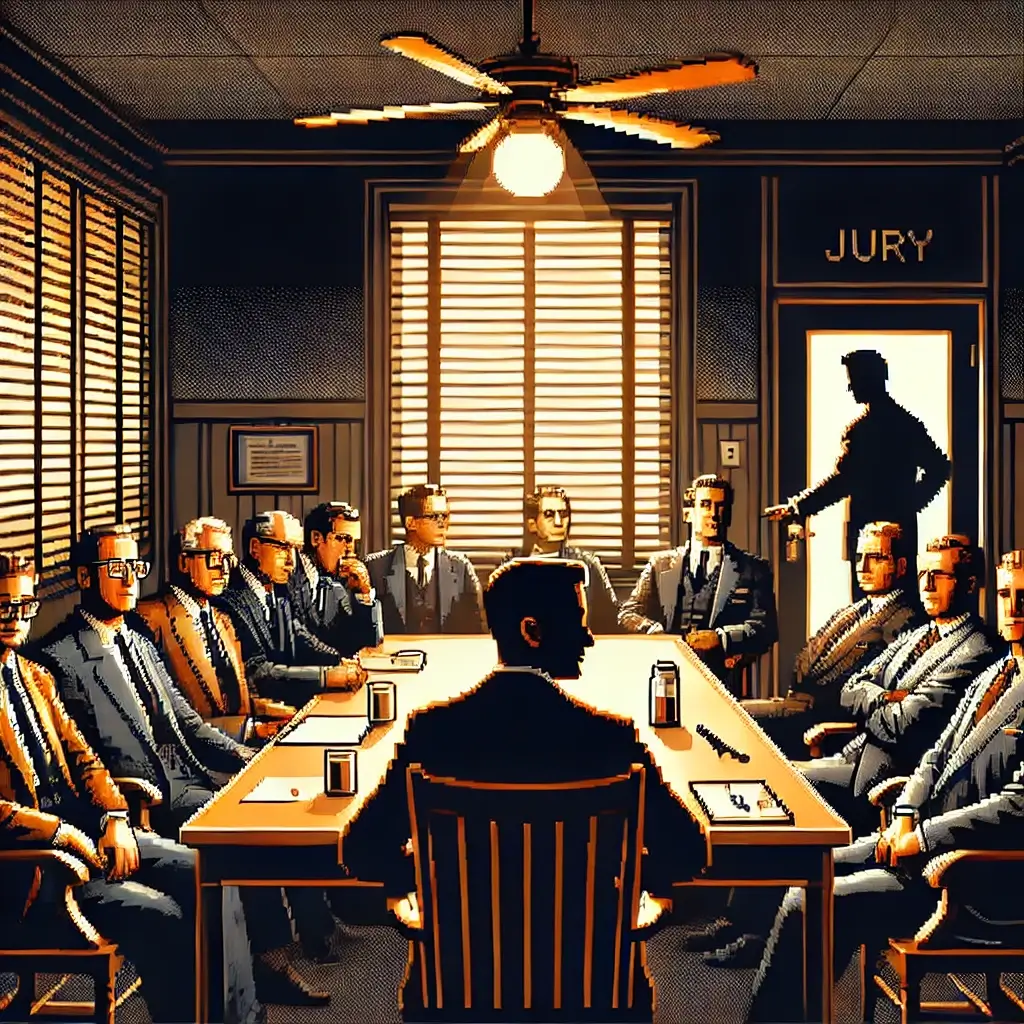
Imagine this: a sweltering hot summer day, a cramped jury room, and the fate of a young man accused of murder resting on the shoulders of 12 Angry Men. No fancy sets, no elaborate costume changes, just raw human drama unfolding before your eyes. And yet, this film grabs you by the collar from the very first frame and doesn’t let go until the final credits roll. It’s like a psychological thriller, a courtroom drama, and a social commentary all rolled into one intense package.
What makes it so incredibly powerful? Well, for starters, it’s the sheer audacity of the premise. A unanimous “guilty” verdict seems inevitable, a foregone conclusion. The jurors just want to get out of there and go home. But then, one man, Juror 8 (played by the incomparable Henry Fonda), dares to raise a hand and say, “Not so fast.” That single act of dissent cracks open the entire case, revealing layer after layer of doubt, prejudice, and uncomfortable truths.
It’s a masterclass in tension. The entire film takes place almost exclusively in that one room, and yet you never feel confined. The camera moves, the angles shift, and the performances are so electrifying that the room itself becomes a character, a pressure cooker where opinions clash and emotions simmer. You feel the heat, the frustration, the sheer weight of responsibility. It’s a sensory experience, even without all the usual cinematic bells and whistles. —
Behind the Barricade: The Genius of Sidney Lumet and Reginald Rose
To truly appreciate the brilliance of 12 Angry Men, we have to talk about the minds behind it: director Sidney Lumet and writer Reginald Rose. Rose originally wrote it as a teleplay for CBS’s Studio One in 1954, and it was such a hit that it naturally transitioned to the big screen. Rose’s script is a thing of beauty – tight, economical, and every line serves a purpose. It’s a testament to how powerful dialogue can be when it’s crafted with precision and insight into human behavior.
And then there’s Sidney Lumet. Oh, Lumet! This was his feature film directorial debut, and what a debut it was! He took a single-room setting and made it feel dynamic and expansive. He used subtle camera work – starting with wide shots that make the room feel large and empty, gradually moving to tighter close-ups as the tension mounts, making the space feel claustrophobic and the conflict inescapable. It’s brilliant visual storytelling that perfectly complements the escalating drama.
Lumet’s direction isn’t just about the camera, though; it’s about getting incredible performances from his cast. He truly understood how to create an ensemble where each actor shines individually while contributing to the cohesive whole. He allowed the actors to really inhabit their characters, to let their biases and personalities bleed through, making each juror feel incredibly real and flawed. This isn’t just a story; it’s a psychological study, and Lumet was the master conductor.
Want to know more about the legendary Sidney Lumet? Check out his work and legacy Here at The Criterion Collection! —
A Jury of Their Peers: Who Are the 12 Angry Men?
One of the most captivating aspects of 12 Angry Men is the sheer variety of characters. They represent a cross-section of American society in the mid-20th century, each bringing their own baggage, biases, and life experiences into that jury room. They aren’t just archetypes; they’re individuals, and you quickly learn to distinguish them, even without knowing their names (they are referred to by their jury numbers).
- Juror 1 (The Foreman): The diligent but somewhat overwhelmed leader, trying to keep order amidst the chaos.
- Juror 2 (The Timid Bank Clerk): Quiet and easily swayed, he’s more comfortable following the crowd than voicing his own opinions.
- Juror 3 (The Hothead): Oh, Juror 3! He’s the loud, aggressive one, consumed by his personal issues and quick to anger. He projects his own frustrations onto the accused, making it incredibly difficult for him to see beyond his own biases. He’s the embodiment of blind prejudice.
- Juror 4 (The Stockbroker): Logical, methodical, and seemingly unswayed by emotion. He relies strictly on facts, or what he perceives as facts. He’s the intellectual, almost robotic, counterpoint to Juror 3’s emotional outbursts.
- Juror 5 (The Man from the Slums): Having grown up in a similar background to the accused, he brings a unique, empathetic perspective, challenging assumptions about how people from “the slums” behave.
- Juror 6 (The Painter): Quiet but principled, he’s not easily intimidated and will speak up when he sees injustice.
- Juror 7 (The Salesman): Impatient, superficial, and more concerned with getting to a baseball game than with deliberating a man’s life. He represents apathy and a lack of civic responsibility.
- Juror 8 (The Architect): The protagonist, the lone dissenter. He’s calm, persistent, and has an unwavering commitment to justice. He embodies critical thinking and the courage to stand alone.
- Juror 9 (The Elderly Man): Observant and wise, he’s often the first to see through the cracks in the other jurors’ arguments, offering quiet but profound insights. He acts as Juror 8’s first ally.
- Juror 10 (The Bigot): Perhaps the most outwardly prejudiced of the group, his racist rants reveal a deep-seated hatred that almost derails the entire process. His contempt for “those people” is palpable and disgusting.
- Juror 11 (The Watchmaker, an Immigrant): Having experienced injustice in his own life, he deeply values the American justice system and insists on thoroughness and fairness. He brings a strong moral compass.
- Juror 12 (The Ad Man): Fickle and easily distracted, he treats the deliberation like a marketing campaign, often doodling or thinking about jingles. He’s more interested in appearances than truth.
Each of these men, in their own way, contributes to the emotional landscape of the film. Their interactions, their arguments, their personal prejudices, and their moments of clarity are what make this film such a rich tapestry of human experience. You’ll find yourself nodding along with some, bristling at others, and perhaps even recognizing a bit of yourself in their flawed humanity. —
The Crucible of Doubt: Unraveling the Evidence, One Grudging Step at a Time
At first glance, the case against the young defendant seems airtight. A knife murder, an eyewitness, a clear motive – it all points to guilty. But Juror 8 isn’t convinced. He doesn’t necessarily believe the boy is innocent, but he believes there’s enough reasonable doubt to warrant a discussion. And that, my friends, is where the magic of 12 Angry Men truly begins.
One by one, Juror 8 meticulously dismantles the prosecution’s case. It’s like watching a detective at work, but instead of a shadowy alley, it’s happening in a stuffy room with a dozen bickering men. He questions the reliability of the eyewitnesses, demonstrates the uniqueness of the murder weapon, and even brings into question the boy’s alibi. It’s not about finding new evidence; it’s about re-examining the existing evidence with a fresh, skeptical eye.
The beauty is in the simplicity and logical progression. Each point of doubt isn’t a grand revelation but a small, persistent chip at the foundation of what seemed like an unshakeable truth. The film teaches us that “common sense” can often be superficial, and that true justice requires a deeper, more rigorous examination. It forces the other jurors, and by extension, us, to confront our own assumptions and biases. It’s a powerful lesson in critical thinking wrapped in an incredibly compelling drama. —
The Whispers of Bias: Prejudice and Presumption on Trial
This is where 12 Angry Men hits hardest. While the film is ostensibly about a murder trial, it’s really about the trial of human prejudice. Each juror brings their own biases into that room, whether it’s classism, ageism, personal grievances, or outright racism.
Juror 10’s blatant bigotry is perhaps the most uncomfortable to watch, as he spews vile generalizations about people from “the slums.” But his isn’t the only form of prejudice on display. Juror 3’s anger stems from his strained relationship with his own son, causing him to project his frustration onto the defendant. Juror 7 just wants to get to his baseball game, showing a shocking indifference to the gravity of the situation. Juror 4, while seemingly logical, initially dismisses the defendant based on his background.
The film brilliantly illustrates how these personal biases can cloud judgment and stand in the way of justice. It’s a powerful mirror reflecting our own society, showing how easily we can jump to conclusions, how readily we can dehumanize others, and how desperately we cling to our preconceived notions. It’s a stark reminder that empathy and open-mindedness are not just nice qualities; they are essential for a fair and just society.
Understanding implicit bias is crucial, especially in legal contexts. Learn more about the psychology of prejudice Here at Psychology Today! —
The Art of Persuasion: How One Voice Can Change a Dozen Minds
If you’re interested in the dynamics of group psychology and the art of persuasion, 12 Angry Men is your textbook. Juror 8 doesn’t grandstand or preach. He uses logic, patience, and empathy. He appeals to reason, but also to the latent sense of justice within the other jurors.
He starts by simply asking questions, planting seeds of doubt. He creates an environment where it’s safe for others to express their own nascent doubts, even if they’re initially hesitant. He doesn’t shame or belittle. Instead, he presents facts, re-enacts scenarios, and gently probes the weaknesses in the prosecution’s case. He leverages the very principles of the justice system – the burden of proof, the presumption of innocence, and the concept of reasonable doubt.
What’s truly remarkable is watching the gradual shift. It’s not a sudden, dramatic epiphany for most. It’s a slow, agonizing process of re-evaluation, where each new piece of doubt chips away at their certainty. Some jurors are swayed by logic, others by a moral appeal, and some simply by the sheer persistence and integrity of Juror 8. It’s a beautiful depiction of how courage, conviction, and a willingness to listen can ultimately prevail against ingrained prejudice and apathy. It reminds us that every single voice has the potential to make a difference, even against overwhelming odds. —
Lessons from the Jury Room: Why 12 Angry Men is More Than Just a Movie
Beyond being an incredible piece of filmmaking, 12 Angry Men offers profound lessons that resonate far beyond the confines of a jury room. It’s a mirror held up to society, forcing us to examine our own biases, our responsibilities as citizens, and the very foundation of our justice system.
- The Importance of Reasonable Doubt: The film is a powerful argument for the principle of reasonable doubt. It’s not about proving innocence, but about ensuring that guilt is established beyond a shadow of a doubt. This concept is fundamental to fair trials.
- The Danger of Prejudice: It vividly illustrates how personal biases and stereotypes can warp judgment and lead to grave injustices. It’s a chilling reminder of the societal cost of unchecked prejudice.
- The Power of Dissent: Juror 8’s courage to stand alone is inspiring. It shows that one individual, armed with conviction and integrity, can challenge the majority and ultimately lead to a more just outcome.
- The Value of Deliberation: In a world that often rushes to judgment, the film champions the slow, painstaking process of deliberation. It shows that true understanding and fairness often require careful thought, open discussion, and a willingness to reconsider.
- Active Citizenship: It highlights the immense responsibility of jury duty and, by extension, active participation in a democratic society. It’s not just about showing up; it’s about engaging critically and conscientiously.
These aren’t just abstract ideas; they’re vital components of a healthy society. Watching this film is almost like attending a masterclass in civic responsibility and ethical decision-making. It leaves you pondering not just the film’s outcome, but your own role in upholding justice and fairness in your community. —
The Legacy of 12 Angry Men: Its Unyielding Impact on Law, Society, and Cinema
It’s no exaggeration to say that 12 Angry Men left an indelible mark on cinematic history and beyond. Despite being a relatively low-budget film, it garnered critical acclaim and has since become a staple in film schools, law schools, and even high school civics classes. Its influence is palpable in countless courtroom dramas and psychological thrillers that followed.
Its impact on legal education is particularly significant. Many law schools use the film to teach aspiring lawyers about jury dynamics, the nuances of evidence, and the profound ethical responsibilities of those involved in the justice system. It’s a vivid, accessible way to illustrate complex legal principles.
Beyond the legal realm, the film continues to resonate because its themes are universal: the struggle between truth and falsehood, the battle against prejudice, and the power of an individual to make a difference. It’s a timeless story about the human condition, about how difficult, yet essential, it is to truly see and understand one another.
And let’s not forget its cultural longevity. How many films from 1957 are still being discussed, analyzed, and revered today with such intensity? Very few. This isn’t just a classic; it’s a living, breathing work of art that continues to provoke thought and inspire discussion for new generations. Its simple setting and focus on dialogue mean it translates incredibly well across different times and cultures, making its message truly global.
Curious about other groundbreaking films that shaped cinema? Explore the American Film Institute’s top lists Here at the AFI! —
Don’t Just Watch It, Experience It!
So, there you have it. 12 Angry Men isn’t just a movie to watch on a lazy Sunday afternoon; it’s an experience. It challenges you, it makes you think, and it reminds you of the immense power and fragility of our justice system. It’s a powerful testament to the idea that true justice isn’t always easy, isn’t always obvious, and sometimes requires an immense amount of patience, courage, and a willingness to simply talk and listen.
If you’ve seen it, watch it again. You’ll undoubtedly catch new nuances, new expressions, and new layers of meaning. If you haven’t, clear your schedule, find it, and prepare to be utterly captivated. You won’t regret spending time with these 12 Angry Men, because their anger, their doubt, and their ultimate pursuit of justice will leave a lasting impression on your own understanding of humanity.
It’s a film that resonates deeply because it’s fundamentally about people: their flaws, their strengths, and their profound capacity for both prejudice and redemption. Don’t miss out on this absolute gem!