
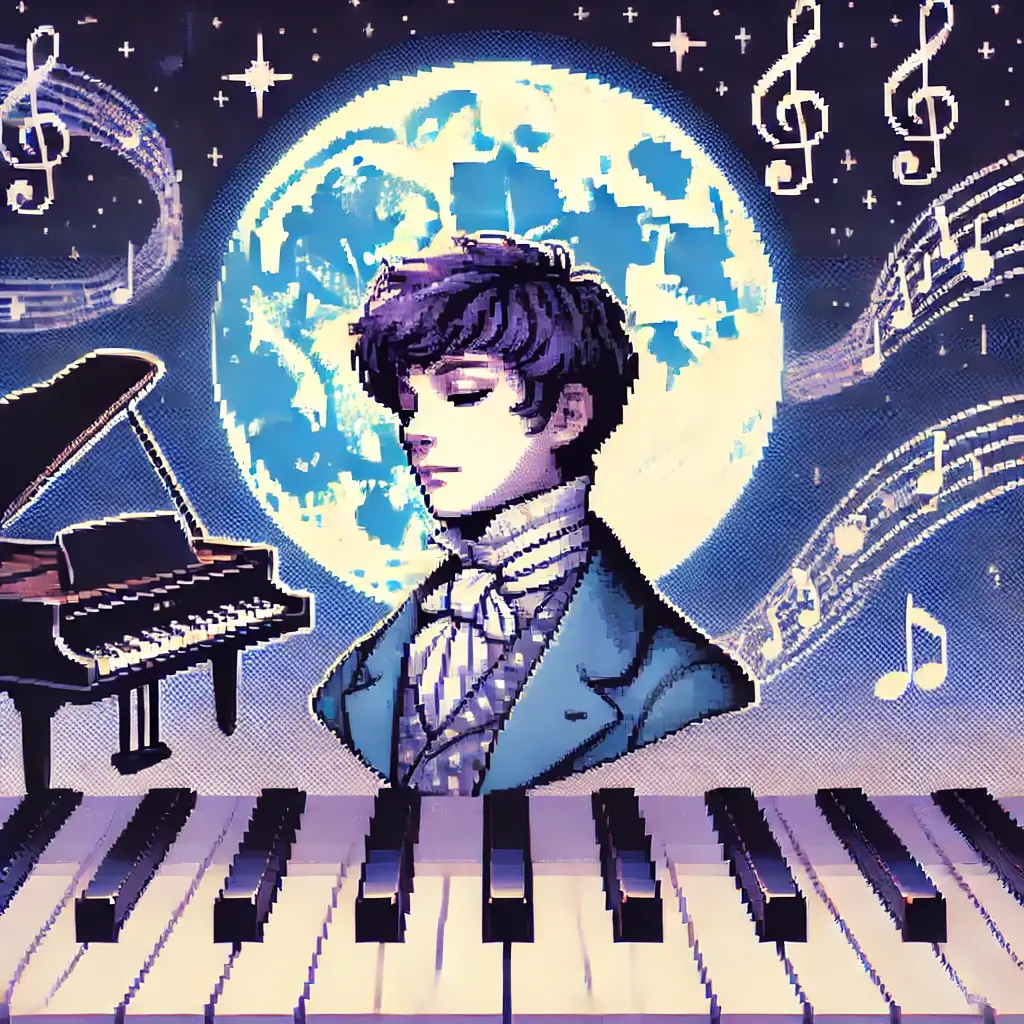
One Magical Night: Unraveling the 100-Year Mystery of Debussy’s Clair de Lune
You know that feeling, right?
That moment when a song comes on and the world just… stops.
It’s a complete and total sensory takeover.
The air changes, your breath catches, and for a few precious minutes, nothing else exists except for the sound flowing into your soul.
For me, and I’d bet for millions of you out there, that song is Claude Debussy’s “Clair de Lune.”
It’s more than just a piece of music; it’s an experience.
It’s a whisper from a distant past that somehow speaks to the very heart of our modern, frantic lives.
A century after its widespread acclaim, its power has not diminished one bit.
I remember the first time I truly listened to it, not just heard it.
I was probably too young to fully grasp the complexities, but I knew it was something special.
It felt like a secret, a hushed conversation with the universe.
The notes didn’t just sound; they shimmered, they drifted, they painted a picture of a moonlit night, not with colors, but with pure, unadulterated emotion.
It’s a piece that has been with me through everything from late-night study sessions to moments of profound sadness and quiet joy.
It’s the kind of music that makes you feel both incredibly alone and profoundly connected to every person who has ever felt a similar wave of emotion wash over them while listening.
But what is it about this one piece that has such an incredible hold on us?
Why, among the countless pieces of classical music composed throughout history, does this particular one stand out as a beacon of beauty and introspection?
That’s what we’re going to explore together.
We’re going to pull back the curtain on the man, the masterpiece, and the moonlight magic that makes “Clair de Lune” truly unforgettable.
I want you to imagine we’re sitting down with a cup of coffee (or a glass of wine, depending on the hour) and just talking about this incredible piece of art.
No stuffy musicology lectures here, just a genuine, heartfelt conversation from one fan to another.
Let’s dive in.
Table of Contents
The Magic in the Moonlight: The Clair de Lune Soundscape
Let’s start with the music itself, shall we?
If you’re a pianist, you know this piece is a beast in a beautiful way.
The opening notes are deceptively simple, almost tentative, like the first pale rays of moonlight peeking through a cloud-filled sky.
Debussy wasn’t just writing notes on a page; he was painting a picture, creating an atmosphere.
This is the very essence of musical impressionism, and “Clair de Lune” is its poster child.
He uses harmony not for tension and release in the traditional sense, but to create a sense of floating, of weightlessness.
The chords are rich, often a little blurry, like watercolors bleeding into each other.
It’s full of parallel motion, where chords move up and down the keyboard together, creating a sound that feels both familiar and otherworldly.
It’s like a dream you’re just on the verge of remembering.
And let’s talk about that arpeggiated section in the middle.
Oh, my goodness.
It’s the emotional climax of the piece, a passionate outburst that feels like a sudden wave of emotion washing over you under the full moon.
The tempo swells, the dynamics build, and the music becomes a torrent of sound.
It’s a moment of pure, unadulterated passion, a love letter written in keys and strings.
But just as quickly as it came, it fades away.
The music returns to its original, hushed state, as if the moon has once again been obscured by clouds, leaving only the faintest glow behind.
The ending is a masterpiece of subtlety.
The final chords are so quiet, so gentle, that they barely seem to exist at all.
It’s not an ending that resolves with a bang; it resolves with a sigh, a soft closing of the eyes, a quiet moment of reflection.
It’s the sonic equivalent of a single, slow tear rolling down your cheek in a moment of sublime beauty.
The entire piece is a masterclass in emotional storytelling without a single word being spoken.
It’s the kind of music that gives you permission to just feel, to let your emotions wash over you without judgment.
It doesn’t tell you what to feel, it just provides the space and the soundtrack for you to feel whatever it is you need to feel in that moment.
From the delicate opening to the passionate core and the peaceful fade, “Clair de Lune” is a complete emotional journey.
And that, my friends, is why it has endured for so long.
The Man Behind the Masterpiece: Who Was Claude Debussy?
So, who was the genius who crafted this sonic poem?
Claude Debussy was a complex, fascinating, and at times, a bit of a cranky character.
He wasn’t your typical buttoned-up, wig-wearing classical composer.
He was a rebel, a rule-breaker, a guy who got tired of the old ways of doing things and decided to invent a whole new musical language.
He was born in France in 1862, and his journey to becoming a musical giant wasn’t always a smooth one.
He was a prodigy, entering the prestigious Paris Conservatoire at the ridiculously young age of ten.
But he wasn’t a conformist.
His teachers often found his harmonic experiments strange and his ideas unconventional.
He was more interested in creating new sounds than in following the strict rules of counterpoint and harmony that had been in place for centuries.
This is where the magic really begins.
Debussy was inspired by everything from the sounds of gamelan music he heard at the 1889 World’s Fair in Paris to the poetry of Symbolist writers like Stéphane Mallarmé and Paul Verlaine.
He was also a huge fan of impressionist painters like Monet and Manet, and he wanted to do with sound what they were doing with light and color.
Instead of painting a clear, detailed picture, he wanted to create an impression, a feeling, a fleeting moment caught in time.
That’s what makes him so cool and so important.
He wasn’t just a composer; he was a sonic architect, building new worlds of sound from the ground up.
His music doesn’t hit you over the head with its message; it invites you in, asking you to listen not just with your ears, but with your whole being.
And while his personal life was a bit of a whirlwind—full of scandalous affairs and financial troubles—his artistic integrity was unshakeable.
He was a man who lived and breathed art, constantly seeking new ways to express the inexpressible.
This relentless pursuit of beauty and innovation is what gave us “Clair de Lune” and so many other masterpieces.
When you listen to this piece, you’re not just hearing the notes; you’re hearing the spirit of a man who dared to be different, who wasn’t afraid to break the rules to create something truly new and breathtakingly beautiful.
He was a true original, and we are all so much richer for his rebellion.
A Journey Through Time: The Creation of Debussy’s Clair de Lune
Here’s a fun fact that might surprise you: “Clair de Lune” wasn’t an instant smash hit.
In fact, it had a long and winding road to get to us.
Debussy composed the piece way back in 1890, when he was in his late twenties, as part of a larger suite for piano titled “Suite bergamasque.”
But here’s the kicker: for reasons that are still a bit of a mystery, he didn’t publish the suite for another two decades!
Can you believe that?
He just sat on this incredible piece of music for twenty years.
It was finally published in 1905, but even then, it wasn’t an immediate sensation.
It took time for the world to catch up with Debussy’s genius, and it wasn’t until a much later transcription for orchestra in the 1920s that it truly began to capture the public’s imagination.
The title itself, “Clair de Lune,” is French for “moonlight,” and it’s a direct reference to a poem by the French Symbolist poet Paul Verlaine.
The poem, also titled “Clair de lune,” is a beautiful and melancholy piece of writing that perfectly captures the spirit of the music.
It speaks of masked figures dancing and singing in the moonlight, a world of beautiful, sad, and fantastical imagery.
This connection is so important because it highlights Debussy’s deep connection to other art forms.
He wasn’t just writing music; he was translating poetry and painting into sound.
The piece is the third movement of the “Suite bergamasque,” which also includes “Prélude,” “Menuet,” and “Passepied.”
Each movement is a little window into a different world, but “Clair de Lune” stands apart as the most famous and beloved of the bunch.
It’s the heart of the suite, the quiet, beating core of the whole collection.
When you listen to it, you can almost feel the long journey it took to get to your ears—the decades of quiet existence before it burst onto the scene and changed the world of music forever.
It’s a reminder that true art often needs time to ripen, to sit in the dark, and to find its moment to shine.
Just like moonlight itself, it emerged slowly, but its glow has illuminated us ever since.
It’s a powerful lesson in patience and artistic integrity, a lesson that seems more relevant than ever in our fast-paced, instant-gratification world.
More Than Just a Song: The Cultural Impact of Clair de Lune
If you’re a movie buff, a gamer, or a casual listener, you’ve probably heard “Clair de Lune” without even realizing it.
This piece has transcended the classical music world and become a staple of modern media.
Think about it: it’s the perfect soundtrack for a moment of quiet reflection, a scene of profound romance, or a feeling of deep melancholy.
The sound of it just hits different.
I mean, who can forget the powerful scene in the movie *Ocean’s Eleven* where it plays over the fountain scene?
It’s the ultimate example of how this piece can elevate a moment, giving it a sense of timeless elegance and emotional weight.
It’s not just a song in the background; it’s a character in the scene, telling a story all its own.
Then there’s the unforgettable use of it in the first *Twilight* movie, creating a sense of ethereal, otherworldly romance that perfectly matched the mood of the film.
It’s been used in everything from *The Simpsons* to *Godzilla: King of the Monsters* (2019), and it even plays a prominent role in the popular video game series *Fallout*.
Its versatility is a testament to its genius.
It can feel romantic, sad, mysterious, and even hopeful, all at the same time.
It’s a sonic chameleon, adapting to the emotional needs of whatever story it’s telling.
And that’s the real secret to its longevity.
It’s not just a piece of history; it’s a living, breathing part of our cultural fabric.
It’s the kind of music that gets passed down from one generation to the next, not through a formal education, but through the shared experience of movies, shows, and games.
Every time a new generation discovers it through a new medium, its legacy gets a little bit stronger, a little bit brighter.
So the next time you hear those familiar opening chords, take a moment to appreciate not just the beautiful music, but the incredible journey it has taken to get to you.
It’s a true cultural icon, a piece of art that has found a home in the hearts of millions of people across the globe.
And it’s a piece that has proven, without a shadow of a doubt, that some stories are best told not with words, but with sound.
Beyond the Keys: Exploring Different Interpretations of Clair de Lune
One of the coolest things about a piece like “Clair de Lune” is how it can be re-imagined and re-interpreted by different artists.
While the original piano version is the one we all know and love, there are so many other fantastic versions out there that offer a fresh perspective.
The most famous alternative version is the orchestral arrangement by André Caplet.
He was a contemporary of Debussy, and his orchestration of the piece is absolutely breathtaking.
The strings swell, the woodwinds sigh, and the harp adds a sparkling quality that feels like moonlight itself.
It gives the piece a whole new sense of scale, turning that intimate piano moment into a grand, cinematic experience.
It’s the version that often gets used in movies, and for good reason.
But there are so many other cool interpretations, too.
I’ve heard it played on the classical guitar, on the harp, and even on the synthesizer.
Each version brings something new to the table.
The guitar version feels more intimate, like a whispered secret.
The harp version, of course, is just pure magic, with the arpeggios sounding like tiny drops of light.
Even jazz musicians have taken a crack at it, infusing Debussy’s harmonies with improvisation and a whole new rhythmic feel.
It’s a testament to the strength of the original composition that it can hold up to so many different styles and interpretations.
It’s like a beautiful poem that can be read in many different voices, each one revealing a new layer of meaning.
So, if you’re a fan of the original, I highly encourage you to go on a little scavenger hunt and seek out some of these other versions.
You might just be surprised by what you find.
It’s a journey that will deepen your appreciation for Debussy’s genius and remind you that art is a conversation, not a monologue.
It’s a beautiful, ongoing dialogue between the composer, the performer, and the listener, and “Clair de Lune” is a shining example of a conversation that will never end.
I mean, who could have ever guessed that a piece of music composed well over a century ago would still be so relevant, so influential, and so deeply loved?
It just goes to show you that some things truly are timeless.
No matter how many times you listen, it never gets old.
Each time you return to it, you’re not just replaying the same old song; you’re discovering something new about yourself, about the music, and about the world around you.
It’s a gift that keeps on giving, and for that, we have to thank the one and only Claude Debussy.
It’s a piece of music that reminds us that there is still so much beauty and wonder in the world, if we just take the time to listen.
So, go on, put it on one more time.
Close your eyes, and let the moonlight wash over you.
Looking for more information on the genius of Debussy and the history of this incredible piece? Check out these links from some of the most trusted sources out there!
Learn More on Britannica Discover the Story on Classic FM Watch an Amazing Performance on YouTube
claude debussy, clair de lune, impressionism, classical music, suite bergamasque