
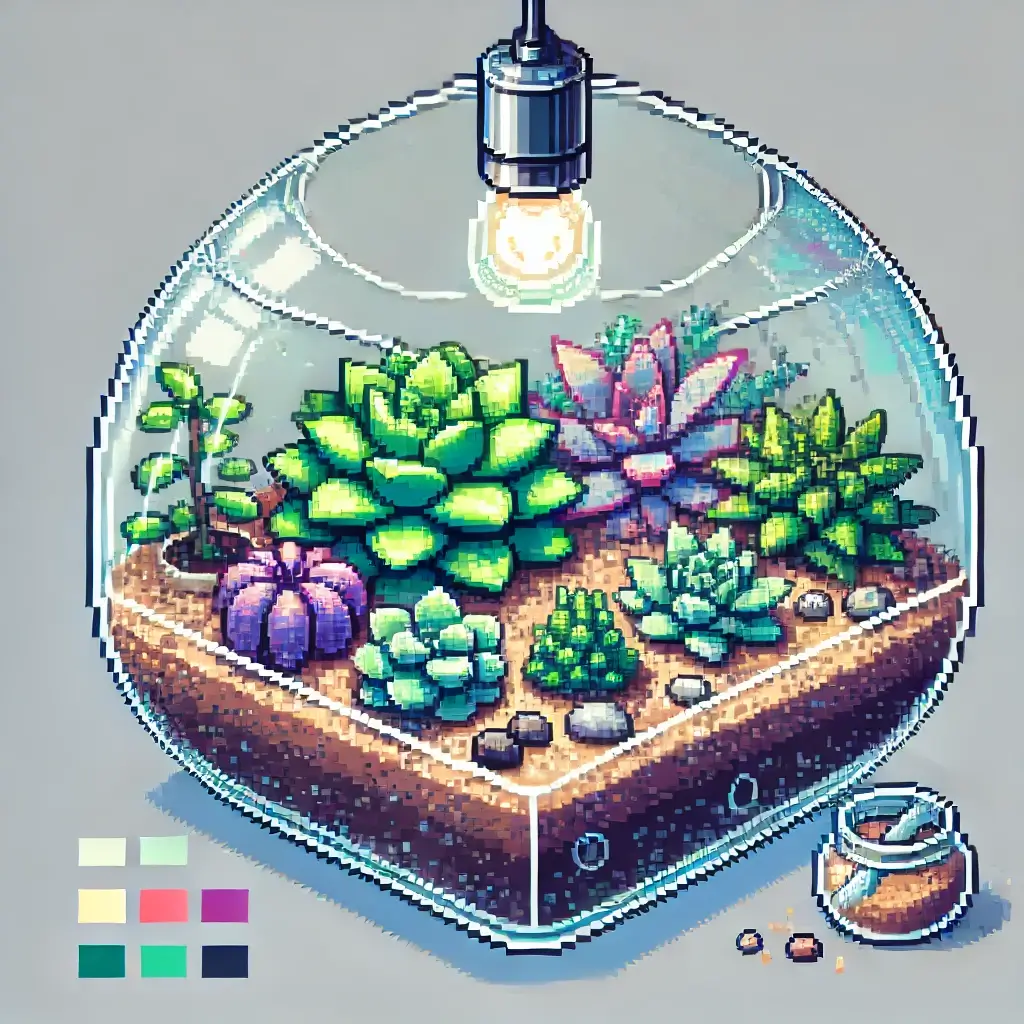
7 Astonishing Succulent Terrarium Secrets for Your Office Desk!
Have you ever stared at your desk and thought, “This is soul-crushing?”
You’re not alone, my friend.
That beige cubicle, the flickering fluorescent lights, the endless hum of the computer—it can all feel a little… lifeless.
But what if I told you that a tiny slice of paradise is just a few steps away from bringing life back into your workspace?
I’m talking about a succulent terrarium.
It’s a mini-ecosystem, a low-maintenance splash of green that can make your desk feel less like a prison and more like a personal sanctuary.
I remember my first office desk. It was a barren wasteland of paperwork and a sad, wilting plant that I’m pretty sure was a peace lily, but it had given up on peace long ago.
I was desperate for a change.
I started researching, and that’s when I fell head-over-heels for succulent terrariums.
The idea of creating my own little world in a glass container was intoxicating.
But let’s be real, the internet is full of “expert” advice that’s about as helpful as a chocolate teapot.
I made every mistake in the book.
I overwatered, I underwatered, I used the wrong soil, and I even picked plants that hated each other.
It was a comedy of errors, but through all the trial and error, I discovered the real secrets to making these little gardens not just survive, but absolutely thrive.
And now, I’m here to share those 7 secrets with you.
This isn’t your average, run-of-the-mill guide.
This is the no-nonsense, honest-to-goodness truth from someone who has been there, killed the plants, and now has a desk that is the envy of the entire office.
Get ready to transform your workspace from drab to fab.
Let’s dig in!
—
Table of Contents
—
Secret #1: The Golden Rule of Container Selection – Succulent Terrarium Containers MUST Breathe!
Okay, let’s get one thing straight.
Succulents hate standing water more than my cat hates bath time.
It’s a deep, primal hatred that leads to something called rot.
And rot, my friends, is the grim reaper of the succulent world.
So, the number one rule?
Choose a container with drainage holes.
I know, I know.
All those beautiful, closed-glass containers you see on Instagram are tempting.
They look so chic, so polished, so… perfect.
But those are for a different kind of plant—the ones that love humidity and moisture.
Succulents, hailing from arid climates, want nothing to do with that.
They are desert dwellers at heart.
Think of it this way: a closed terrarium is like a sauna.
It’s hot, humid, and everything gets sweaty.
A succulent in a sauna?
That’s a recipe for disaster.
What you want is a container that allows excess water to escape.
This is where a little pottery knowledge comes in handy.
Terracotta pots are the unsung heroes of the plant world for this very reason.
Their porous nature allows water to evaporate through the sides, creating a perfect, well-aerated environment for your succulent’s roots.
But you can also find beautiful ceramic pots, wooden planters, or even concrete containers that have a simple, essential hole at the bottom.
If you’re absolutely set on a glass container, at least choose one with a wide, open top.
This will increase air circulation and help the soil dry out between waterings.
You’ll also need to be extra, extra careful with your watering habits.
I’ve seen people use everything from old teacups to vintage bowls, but they always make sure to drill a small drainage hole.
There are even clever little kits you can buy to make this process super easy.
A word of caution: if you’re a beginner, please, for the love of all that is green and beautiful, start with a container with a drainage hole.
You can thank me later when your plants are still alive and well.
A friend of mine, a real enthusiast, once tried to make a closed terrarium with succulents because he “liked the look.”
Three weeks later, he had a lovely, moldy, rotting mess.
He learned his lesson the hard way.
Don’t be that person.
Choose wisely, my friend.
Key takeaway: The container is the foundation of your succulent terrarium. Choose one with a drainage hole to prevent root rot, which is the number one killer of succulents.
—
Secret #2: The Unsung Hero of Soil Mixes – Your Succulent Terrarium Needs Gritty Goodness!
We’ve talked about the container, which is the house.
Now let’s talk about the foundation of that house: the soil.
If you’re using standard potting soil, you’re setting yourself up for failure.
That stuff is designed to hold moisture, which is the exact opposite of what succulents need.
I learned this the hard way with my first terrarium.
I used some all-purpose potting mix I had lying around from my last attempt at growing basil (which also failed, but that’s a story for another time).
The soil stayed wet for what felt like an eternity, and the roots of my poor little Echeveria turned to mush.
It was a sad day.
The secret is to use a gritty, fast-draining soil mix.
You want a soil that mimics the rocky, sandy environments where succulents naturally grow.
You can buy pre-made succulent and cactus soil from any garden center.
These mixes are usually a blend of soil, sand, perlite, and/or pumice.
But for the true DIY enthusiast (and let’s be honest, that’s half the fun of this whole thing), you can make your own.
My go-to recipe is a simple one:
– One part potting soil
– One part coarse sand (not the kind from the beach, which is too fine and can hold salt)
– One part perlite or pumice
Mixing these together creates a soil that drains like a dream and provides the perfect amount of air for the roots to breathe.
Perlite and pumice are particularly fantastic because they are lightweight, porous volcanic rocks that help with aeration and prevent soil compaction.
Think of them as tiny little air pockets for your succulent’s roots.
A common mistake I see people make is adding a layer of pebbles or activated charcoal at the bottom of a container without a drainage hole.
The theory is that this creates a “drainage layer,” but in reality, it just raises the water table.
The roots still end up sitting in a pool of water, which, as we established, is a one-way ticket to rot city.
So, a gritty soil mix is your best friend.
It’s the unsung hero that will ensure your succulent terrarium has a long, happy life.
Spend a little time getting this right, and you’ll save yourself a lot of heartache down the road.
Key takeaway: Ditch the regular potting soil. Use a fast-draining, gritty soil mix (either store-bought or a DIY blend of soil, sand, and perlite) to prevent waterlogging and root rot.
—
Secret #3: The Plant Compatibility Checklist – How to Pick Your Perfect Succulent Terrarium Plants!
This is where the fun begins!
Walking into a nursery and seeing all those adorable little succulents can be overwhelming.
But you can’t just grab any plants you think are cute and throw them together.
That’s like putting a polar bear and a camel in the same room and hoping for the best.
It’s a recipe for plant drama.
The key is to choose plants that have similar care requirements.
Specifically, they should all have similar needs for light and water.
For an office desk terrarium, this usually means choosing plants that can tolerate lower light conditions and are forgiving if you miss a watering.
Here are some of my personal favorites for a successful succulent terrarium:
– **Haworthia:** These are absolute champions of low light. They have thick, fleshy leaves and often have cool, zebra-like stripes or translucent tips. They’re like the cool, quiet kids in the plant world.
– **Gasteria:** Sometimes called “ox tongue” for their long, thick leaves, Gasteria are another low-light warrior. They’re slow-growing and have a unique, chunky look that adds great texture to a terrarium.
– **Sansevieria (Snake Plant) ‘Dwarf’ Varieties:** The big snake plants are too large, but the dwarf varieties are perfect. They’re known for their ability to survive neglect and don’t need a lot of light. Plus, they look super modern.
– **Jade Plant (Crassula ovata):** This is a classic for a reason. Jade plants are resilient, have a beautiful tree-like form, and can handle a variety of light conditions. Just be careful not to overwater them.
– **Echeveria:** Echeverias are the rosettes you see everywhere. They come in a stunning array of colors and are absolutely gorgeous. However, they need more light than the others on this list, so they are best for a desk that gets some natural light.
What you want to avoid are plants like String of Pearls, Donkey’s Tail, or Sedum, which tend to be more sensitive or have different growth habits.
They might look great in a hanging basket, but they can be a pain in a confined terrarium space.
Also, consider the size of your plants.
You don’t want a plant that will outgrow the container in a month.
Choose small, slow-growing varieties that will fit comfortably together without being crowded.
A terrarium is a small-scale garden, so you need to think about the composition.
I like to mix different shapes and textures.
Maybe a rosette-shaped Echeveria, a vertical Sansevieria, and a textured Haworthia.
This creates visual interest and makes your terrarium look like a professional’s work, even if you’re just a humble office worker with a dream.
Key takeaway: Choose succulent plants with similar light and water needs. Opt for slow-growing, low-light tolerant varieties like Haworthia or Gasteria to ensure your terrarium thrives on your office desk.
—
Secret #4: The Art of Watering – The Single Most Important Succulent Terrarium Skill!
This is where most people get it wrong.
I can’t tell you how many times I’ve heard someone say, “I just don’t have a green thumb. I killed my succulent.”
And when I ask them how they watered it, they usually say something like, “Oh, I gave it a little bit every week.”
Ding, ding, ding!
We have a winner.
The biggest myth about succulents is that they need a little bit of water often.
That’s completely false.
Think back to their natural habitat.
They live in deserts, where it might not rain for months.
But when it does rain, it pours.
The plants soak up all the water they can and store it in their fleshy leaves, stems, and roots.
Then they go into survival mode, living off those reserves until the next downpour.
You need to replicate this cycle.
The correct way to water your succulent terrarium is to water it thoroughly, and then let it completely dry out before watering it again.
This means giving it a good soak until water runs out the drainage hole.
If you’re using a decorative saucer, make sure to empty it so the plant isn’t sitting in standing water.
Then, you wait.
How do you know when to water again?
The best way is to stick your finger about an inch or two into the soil.
If it feels dry, it’s time to water.
If it’s still damp, wait a few more days.
This could be anywhere from every 2-4 weeks, depending on the season, the humidity in your office, and the amount of light your terrarium is getting.
When you do water, don’t just sprinkle a little on the top.
That encourages the roots to grow upwards, seeking the surface water, which makes the plant unstable and unhealthy.
You want those roots to dig deep for the water.
And if you’re using a glass container without a drainage hole (which I still strongly advise against), you have to be even more careful.
Use a spray bottle, but not to mist the leaves.
You want to aim for the soil.
Even better, use a syringe or a small watering can with a long, thin spout to direct the water exactly where it needs to go.
Just a tiny bit, and only when the soil is completely, bone-dry.
Trust me on this one.
It’s a game-changer.
Key takeaway: Water your succulent terrarium deeply but infrequently. Wait for the soil to completely dry out between waterings to prevent root rot and mimic the plant’s natural desert cycle.
—
Secret #5: Lighting is Everything (And Your Office Probably Sucks) – The Office Succulent Terrarium Light Hack!
Let’s face it.
Unless you’ve got a corner office with a massive, sun-drenched window, your workspace probably isn’t a horticultural paradise.
Most offices are filled with fluorescent lighting, which is great for keeping us from falling asleep at our desks, but terrible for plants.
This is where a little ingenuity comes in.
Succulents need bright, indirect light to thrive.
Direct, hot sun can burn their leaves, but too little light will cause them to “etiolate”—which is a fancy word for stretching out.
The plant will become tall and leggy, reaching for a light source that isn’t there.
It’s a sad, desperate sight.
So, what’s a cubicle dweller to do?
First, find the best spot you can.
A desk near a window is gold.
Even if it’s a north-facing window, the indirect light is better than nothing.
If you’re stuck in a dark corner, don’t despair.
This is where technology comes to the rescue.
A small, full-spectrum grow light can be a lifesaver.
You can get these as a clip-on lamp that attaches right to your desk or a small, sleek light that sits above your terrarium.
They are surprisingly affordable and make all the difference.
Set a timer for 8-12 hours a day, and your succulents will be happy as clams.
I once worked with a guy who was so proud of his terrarium.
He’d tell anyone who would listen how “easy” they were.
But after a few months, his beautiful Echeveria looked like a sad, stretched-out ghost of its former self.
I finally leaned over and told him, “Your plant is desperately trying to escape your desk. Get it some light, man.”
He bought a small grow light, and within a few weeks, the new growth was compact and vibrant again.
It was a happy ending.
So, don’t rely on the office lights.
They’re just not designed for plants.
Invest in a little grow light, and you’ll see a world of difference in the health and happiness of your succulent terrarium.
Key takeaway: Place your succulent terrarium in a spot with bright, indirect light. If natural light is scarce, a small, full-spectrum grow light is an excellent and affordable solution to prevent etiolation.
—
Secret #6: The Power of Decoration – Elevate Your Succulent Terrarium from “Plant in a Pot” to “Work of Art”!
So you’ve got the right container, the perfect soil, and the ideal plants.
Now, let’s talk about the fun part: making it look amazing.
This is where your inner artist gets to shine.
The right decorations can transform your succulent terrarium from a simple arrangement into a captivating miniature landscape.
But there are a few rules to follow.
First, avoid anything that holds moisture.
This means no moss, no fresh wood that hasn’t been properly dried, and no sponges.
These things will trap moisture, which, as we know by now, is a bad, bad thing for succulents.
Instead, go for things that add texture and visual interest without holding water.
Here are some of my favorite decorative elements:
– **Pebbles and Rocks:** Use small river rocks, smooth pebbles, or even larger, interesting stones. They come in a variety of colors and can be arranged to create a path or a rocky outcrop.
– **Sand and Gravel:** A layer of decorative sand or fine gravel on the surface of the soil can make the terrarium look clean and finished. It also helps to visually check if the soil is dry. Just be sure to use a coarse sand, not the kind you’d find at the beach.
– **Driftwood and Petrified Wood:** These pieces are beautiful and completely dry. They add a natural, rustic feel to your terrarium. Just make sure they’re small enough to fit without overwhelming the plants.
– **Miniature Figurines:** This is where you can really get creative. A tiny gnome, a little bench, or a small animal figurine can add a whimsical, storybook feel to your terrarium. It’s your own little world, so make it a place you’d want to visit.
– **Crushed Glass or Sea Glass:** If you want a more modern, polished look, crushed glass or sea glass can be a beautiful addition. They sparkle and add a touch of color.
When you’re arranging your decorations, think about scale and balance.
You don’t want the decorations to overpower the plants.
The plants should still be the stars of the show.
My friend Susan, who is an absolute master at this, once created a terrarium that looked like a tiny desert landscape.
She used different colored sands to create a swirling pattern, arranged some small river rocks to look like a dry riverbed, and placed a tiny, almost invisible lizard figurine near a Haworthia.
It was a masterpiece.
So, don’t be afraid to experiment.
The right decorations can turn your terrarium into a conversation starter and a source of daily joy.
Key takeaway: Use non-moisture-retaining decorations like pebbles, decorative sand, and small figurines to add visual interest and a personal touch to your succulent terrarium.
—
Secret #7: The Low-Maintenance Lie – Your Succulent Terrarium Still Needs Your Love!
The biggest selling point of succulents is that they are “low-maintenance.”
And while that’s true compared to, say, an orchid or a fiddle-leaf fig, it doesn’t mean “no maintenance.”
I’ve seen people buy a beautiful succulent terrarium, put it on their desk, and then forget about it for six months, expecting it to be in perfect condition.
That’s like buying a new car and never putting gas in it.
It’s going to stop working, and it’s not the car’s fault.
Your succulent terrarium needs your love and attention, even if it’s just a little bit.
Here are a few things you need to do to keep your terrarium happy and healthy:
– **Rotate it:** If you’re not using a grow light, make sure to rotate your terrarium every week or so. This ensures that all sides of the plants get an equal amount of light, preventing them from leaning and becoming lopsided.
– **Prune it:** Succulents, even the slow-growing ones, will eventually get bigger. Don’t be afraid to snip off dead leaves or trim a plant that’s getting too tall. This encourages new, healthy growth and keeps the terrarium looking neat.
– **Check for pests:** While succulents are pretty hardy, they can still get pests like mealybugs or spider mites. If you see anything unusual, a quick google search will help you identify the problem, and a cotton swab dipped in rubbing alcohol can usually take care of it.
– **Wipe down the glass:** Dust will accumulate on the glass and on the leaves of your plants. A gentle wipe with a dry cloth or a soft brush will keep everything looking clean and vibrant.
– **Refresh the soil (occasionally):** After a year or two, the soil can become depleted of nutrients. You can carefully remove the plants, add some new soil, and replant them. It’s a bit of a chore, but it’s worth it.
The joy of a succulent terrarium is in the process.
It’s a little bit of gardening that you can do in your office.
It’s a break from the screen, a moment to connect with something living and beautiful.
So, embrace the “low-maintenance” label, but don’t take it too literally.
A little bit of care goes a very long way.
And as a reward, you’ll have a stunning, vibrant terrarium that brings you a little piece of nature every single day.
Key takeaway: Succulent terrariums require some basic care, including rotating, pruning, and checking for pests. Regular, small acts of attention will ensure your plants remain healthy and beautiful.
—
The Ultimate Succulent Terrarium Transformation Awaits!
There you have it.
The 7 astonishing secrets to creating and maintaining a succulent terrarium that will not only survive but truly flourish on your office desk.
These aren’t just tips; they’re the hard-won wisdom from someone who has been through the trenches of plant parenting.
Now, your desk doesn’t have to be a beige wasteland.
It can be a thriving, vibrant ecosystem that brings you a little bit of peace and a lot of joy throughout your workday.
The journey is half the fun, and trust me, there is nothing more satisfying than watching your own little garden grow.
Don’t be afraid to get your hands a little dirty and to make a few mistakes along the way.
That’s how we learn.
And if you need a little more inspiration, here are some great resources to get you started on your succulent terrarium journey.
Now, get out there and start building your own little slice of paradise.
You got this.
Succulent Terrarium, Office Decor, Desk Plants, Succulent Care, Indoor Gardening