
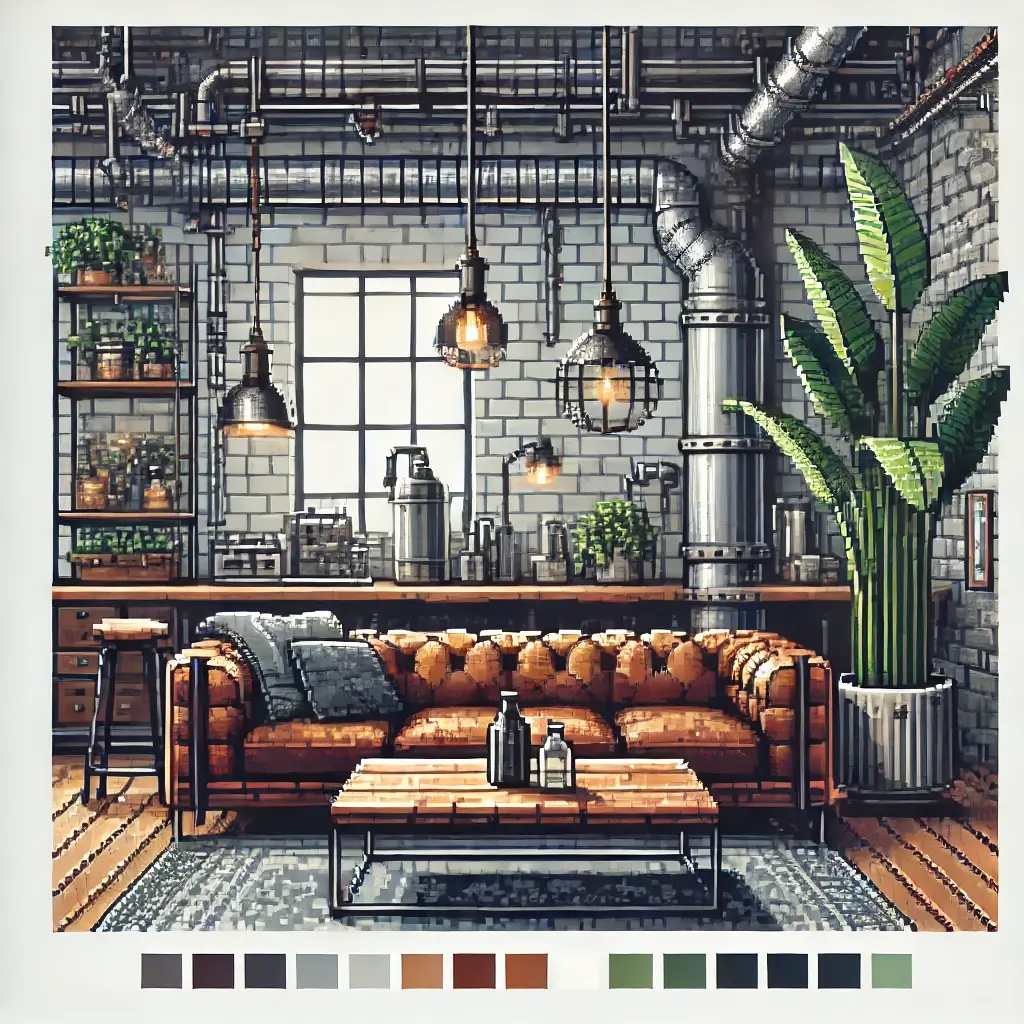
7 Unbelievable Ways Industrial Style Will Revolutionize Your Home!
Hey there, design enthusiasts!
Are you tired of bland, cookie-cutter interiors?
Do you crave a home that tells a story, a space that feels authentic and brimming with character?
Well, buckle up, because we’re about to dive deep into the electrifying world of **industrial style** for residential spaces, and trust me, it’s a game-changer.
This isn’t just a trend; it’s a philosophy, a way of life that celebrates the raw, the honest, and the beautifully imperfect.
Forget everything you thought you knew about interior design, because **industrial style** is here to shatter expectations and forge a truly unique aesthetic.
For years, industrial design was confined to lofts and converted factories, but now, it’s crashing into suburban homes and urban apartments, bringing with it an unapologetic edge.
And honestly, it’s about time!
Who wouldn’t want a piece of that cool, sophisticated grit in their everyday living?
I’ve seen countless transformations, from dreary dens turning into dazzling, dynamic spaces to sterile kitchens gaining an instant shot of personality.
The beauty of **industrial style** lies in its versatility.
It can be edgy and bold, or surprisingly warm and inviting.
It’s about embracing the bones of a building, letting materials speak for themselves, and creating a space that feels lived-in, yet incredibly chic.
So, if you’re ready to inject some serious cool into your abode, keep reading.
We’re going to explore **7 unbelievable ways** to bring that irresistible **industrial style** into your residential space, proving that you don’t need to live in a repurposed warehouse to enjoy its charm.
Let’s get started! —
Table of Contents
—
What’s the Deal with Industrial Style Anyway?
Before we dive into the juicy bits, let’s set the stage.
What exactly *is* **industrial style**?
Imagine the early 20th century, the era of booming factories and bustling workshops.
Think about the raw, unfinished beauty of those spaces: exposed brick, concrete floors, visible pipes, and sturdy metal fixtures.
It’s about celebrating utility, functionality, and the inherent beauty of structural elements.
It’s not about hiding imperfections; it’s about showcasing them, turning flaws into features.
Many of us are drawn to it because it feels authentic, unpretentious, and a refreshing departure from overly polished, sterile designs.
It has a rugged elegance, a kind of sophisticated defiance that says, “I’m cool, I’m practical, and I don’t need to impress anyone.”
In a world of mass-produced everything, **industrial style** often embraces salvaged, repurposed, and handmade items, giving spaces a unique, one-of-a-kind feel.
It’s like finding a vintage leather jacket that fits perfectly – it just feels right. —
1. Exposed Elements: The Heart of Industrial Charm
Unveiling the Beauty Beneath
This is arguably the cornerstone of **industrial style**, and it’s where you can really make a statement.
Forget drywall and dropped ceilings for a moment.
In an industrial-inspired home, the structural elements become part of the décor.
We’re talking about **exposed brick walls**, **visible ductwork**, **open piping**, and even **raw concrete ceilings**.
It’s about peeling back the layers and letting the bones of your home shine through.
I once consulted with a couple who lived in a charming but somewhat nondescript 1950s ranch house.
When we knocked down a wall, we discovered a beautiful, perfectly preserved brick chimney hidden underneath!
Instead of covering it up, we cleaned it, sealed it, and made it the focal point of their living room.
The transformation was instantaneous and breathtaking.
It added an incredible amount of character and that undeniable **industrial style** vibe.
Even if you don’t have a hidden brick wall, you can simulate this look.
Think about brick veneer, or even a strategically placed accent wall with a concrete finish.
For ceilings, consider leaving ducts and pipes exposed if they’re in good condition, or painting them a matte black or metallic silver for a striking contrast against a lighter ceiling.
It might sound unconventional, but trust me, it works.
It creates a sense of openness and authenticity that’s hard to replicate with traditional finishes.
It’s like looking at the intricate mechanics of a beautiful watch – seeing the working parts only enhances its appeal. —
2. Materials Matter: Concrete, Metal, and Reclaimed Wood
The Triumvirate of Toughness and Texture
When it comes to **industrial style**, your material palette is everything.
We’re talking about a trifecta of textures that instantly evoke that factory-chic aesthetic: **concrete, various metals, and reclaimed wood**.
These materials are not just durable; they are intrinsically beautiful in their raw, unrefined state.
Let’s start with **concrete**.
It’s no longer just for foundations and sidewalks.
Concrete floors, countertops, and even accent walls are becoming incredibly popular in residential settings.
They offer a sleek, minimalist, and incredibly durable surface that perfectly complements the **industrial style**.
Plus, they’re surprisingly versatile – you can polish them to a high shine or leave them with a more matte, natural finish.
Next up, **metal**.
Think about exposed steel beams (if you’re lucky enough to have them!), galvanized steel, wrought iron, and even copper accents.
These metals can appear in lighting fixtures, furniture frames, shelving units, and decorative elements.
The beauty of metal lies in its strength and its ability to age gracefully, developing a rich patina over time.
Imagine a raw steel dining table base or a set of industrial-style bar stools with distressed metal seats.
These aren’t just functional pieces; they’re works of art that speak volumes about the **industrial style**.
And finally, **reclaimed wood**.
This is where the warmth and soul come in.
Whether it’s salvaged barn wood, old factory floorboards, or repurposed crates, reclaimed wood adds a layer of history and character that’s simply irreplaceable.
Its imperfections – the knots, the nail holes, the weathered grain – tell a story and provide a beautiful contrast to the harder edges of concrete and metal.
You can use reclaimed wood for accent walls, custom furniture pieces, open shelving, or even a stunning dining table.
Combining these materials is where the magic truly happens.
A concrete countertop with raw steel legs and a reclaimed wood top? Bingo!
That’s the kind of textural richness that defines **industrial style**.
It’s a symphony of strong, honest materials that create a cohesive and captivating design.
For more inspiration on integrating these materials, check out this great resource on using reclaimed wood:
Explore Reclaimed Wood Design Ideas —
3. Lighting That Makes a Statement
Illuminating Industrial Elegance
Lighting in **industrial style** isn’t just about illuminating a space; it’s about adding architectural interest and a touch of vintage flair.
Think about the types of lights you’d find in an old factory or workshop: large, utilitarian, and often made of metal.
The beauty is in their no-nonsense design and robust materials.
**Pendant lights** are your best friend here.
Look for oversized metal shades, cage designs, or even exposed bulbs with filament details.
Hanging a series of these over a kitchen island or dining table instantly screams “**industrial style**.”
I recently helped a client select a set of three matte black pendant lights for their open-plan living area.
They weren’t just lights; they were sculptural elements that drew the eye and grounded the entire space.
Beyond pendants, consider **task lighting** that mimics workshop lamps.
Adjustable desk lamps with articulated arms, wall-mounted sconces with exposed bulbs, or even floor lamps with tripod bases are perfect.
These pieces are both functional and decorative, embodying the practical ethos of **industrial style**.
Edison bulbs are practically a must-have.
Their warm, inviting glow and visible filaments add a touch of nostalgic charm that softens the otherwise utilitarian feel.
Even track lighting, often associated with galleries, can work wonderfully in an industrial setting, especially if paired with vintage-inspired fixtures.
Don’t be afraid to mix and match. A large, dramatic factory-style pendant can be complemented by smaller, more understated wall sconces.
The key is to choose fixtures that feel robust, authentic, and purposeful.
They should look like they could withstand a day’s work in a busy workshop, even if they’re just illuminating your latest novel.
For some fantastic industrial lighting options, check out sites like these:
Discover Industrial Lighting at Lumens —
4. Furniture: Function Meets Form
Sturdy, Practical, and Utterly Cool
When it comes to furniture in **industrial style**, think less about plush comfort (though that’s not entirely out!) and more about robust construction and practical design.
The pieces should look like they could have been repurposed from a factory floor, or at least inspired by that aesthetic.
Materials are key here, echoing our earlier discussion.
Look for pieces made of **metal (especially distressed or blackened steel), solid wood (especially reclaimed or unfinished), and leather**.
A classic **industrial style** dining table might feature a thick, reclaimed wood top with heavy-duty metal legs.
Pair it with metal Tolix-style chairs for that iconic look.
For seating, distressed leather sofas or armchairs are perfect.
They offer a rugged elegance that ages beautifully, developing a rich patina over time.
Imagine a well-worn leather club chair next to a metal floor lamp – pure **industrial style** bliss!
Storage solutions should also lean into the utilitarian.
Think about **open shelving units** made from pipes and wood planks, or metal lockers repurposed as cabinets.
Industrial carts on wheels can serve as coffee tables or mobile storage, adding both functionality and a playful nod to their factory origins.
Remember, the goal isn’t just aesthetics; it’s about pieces that feel sturdy and built to last.
They should look like they’ve got a story to tell, even if they’re brand new.
Don’t be afraid to scour flea markets, antique shops, or even salvage yards for unique pieces that can be given a new life.
Sometimes, the most interesting **industrial style** furniture is the kind that wasn’t originally intended to be furniture at all!
This approach gives your home a truly authentic and personalized touch that mass-produced items just can’t replicate.
It’s about finding the beauty in the raw and the practical. —
5. Color Palettes: Embracing the Moody and Monochromatic
The Art of Subtlety and Depth
The color palette for **industrial style** is typically subdued, drawing inspiration from the raw materials themselves.
Think neutrals, grays, blacks, whites, and earthy tones.
These colors provide a powerful backdrop for the textures of concrete, metal, and wood to truly shine.
**Grays** are your best friend here, from light concrete grays to deep charcoal.
They evoke the feeling of raw materials and provide a sophisticated, urban feel.
**Blacks** are excellent for creating strong contrasts, highlighting architectural features, or framing spaces.
Think about black window frames, matte black light fixtures, or dark metal furniture.
**Whites and off-whites** can be used to open up spaces and provide a clean, crisp counterpoint to the darker, heavier elements.
They can also help to make a space feel less cavernous and more inviting.
While the primary palette is muted, you can introduce **pops of color** strategically.
Think about a vibrant piece of art, a vintage factory sign, or even a single, bold piece of furniture.
A deep jewel tone like emerald green or sapphire blue can add a touch of unexpected luxury without detracting from the overall **industrial style**.
I often suggest using colors found in natural oxidation, like rust-colored accents or deep coppers, to add subtle warmth and authenticity.
The key is to create a sense of depth and visual interest through texture and material variation, rather than relying heavily on bright, bold colors.
It’s about creating a moody, sophisticated atmosphere that’s both edgy and comfortable.
It’s like a beautifully composed black and white photograph – the lack of color enhances the focus on form, texture, and light.
For more on industrial color schemes, explore articles like this:
Houzz: Industrial Color Palette Ideas —
6. The Art of Accessorizing: Less is More, But Meaningful
Curated Chaos and Purposeful Placement
Accessorizing in **industrial style** is a delicate dance.
It’s not about clutter; it’s about thoughtful curation.
Every piece should feel like it has a purpose, a story, or a unique aesthetic appeal that enhances the overall look.
Think about vintage finds: old factory signs, large gears, antique tools, or even repurposed machine parts.
These items add authenticity and a touch of quirky charm.
I once helped a client incorporate an old, oversized clock face from a defunct train station into their living room wall.
It was a truly spectacular focal point that instantly defined the space’s **industrial style**.
Art should lean towards abstract, architectural, or even gritty urban photography.
Framed blueprints or schematics can also be fantastic additions.
Consider large-scale pieces that command attention without overwhelming the space.
Plants can surprisingly work wonders in an **industrial style** setting.
They bring life and a touch of organic softness to the hard edges of metal and concrete.
Look for robust plants like snake plants, ZZ plants, or even large floor-standing fig trees, housed in simple concrete or metal planters.
Textiles, while often minimal, can add necessary warmth.
Think about chunky knit throws in neutral colors, or rugs with subtle patterns that mimic distressed concrete or aged metal.
Avoid anything too plush or overly ornate.
The goal is to enhance the raw aesthetic, not detract from it.
Shelving filled with books, simple ceramic or metal objects, and perhaps a few personal treasures can add character without feeling messy.
Remember, the beauty of **industrial style** is in its simplicity and functionality, even when it comes to accessories.
Choose pieces that genuinely resonate with you and contribute to the narrative of your space.
It’s about quality over quantity, always. —
7. Balancing the Bold: Softening the Edges
The Human Touch in an Industrial Landscape
Now, here’s the secret sauce to making **industrial style** work beautifully in a residential setting: **softening the edges**.
While the core elements are raw and rugged, you don’t want your home to feel like a cold, uninviting factory.
This is where warmth and comfort come into play, making the space truly livable.
**Textiles are your friend.**
Introduce plush rugs, soft throws, and comfortable cushions on your sofas and chairs.
Even though the furniture might be robust, the textiles invite you to sit down and relax.
Think natural fibers like wool, linen, or cotton in neutral or earthy tones.
**Wood elements**, especially those with warm tones, are crucial.
We talked about reclaimed wood, but even regular wood furniture, if it’s substantial and well-crafted, can provide a beautiful counterpoint to metal and concrete.
A warm wooden dining table or a solid wood bookshelf can instantly make a room feel more inviting.
**Strategic lighting** also plays a huge role in adding warmth.
While industrial fixtures are key, the type of light they emit matters.
Opt for warm white bulbs (around 2700K-3000K) to create a cozy, ambient glow.
Consider dimmers to control the mood throughout the day and evening.
**Plants and greenery** are non-negotiable for softening an industrial space.
They bring life, color, and a natural element that contrasts beautifully with the man-made materials.
From tall floor plants to smaller succulents on shelves, they add a touch of organic softness.
Finally, **personal touches** are essential.
Photos, books, unique art pieces, and cherished collectibles prevent the space from feeling like a showroom.
They tell your story and make the industrial backdrop uniquely yours.
It’s about striking a balance, ensuring that your **industrial style** home is not just visually stunning but also incredibly comfortable and welcoming.
It’s like wearing a perfectly tailored suit with a soft, cashmere sweater underneath – the best of both worlds.
For ideas on how to soften industrial spaces, delve into design blogs and look for examples that blend industrial with modern or bohemian elements:
Architectural Digest: Industrial Decor Ideas —
Is Industrial Style Right for You?
So, you’ve read through the **7 unbelievable ways** to inject **industrial style** into your home.
But how do you know if this aesthetic is truly for you?
Well, ask yourself a few questions:
Do you appreciate the beauty in raw materials and unfinished textures?
Are you drawn to spaces that feel authentic and lived-in, rather than perfectly polished?
Do you love the idea of incorporating vintage finds or repurposed items into your decor?
Do you enjoy a minimalist approach to clutter, preferring quality over quantity?
If you nodded along to most of those, then chances are, **industrial style** is calling your name!
It’s not just for urban dwellers or those with vast lofts anymore.
Even a small apartment can benefit from a few key industrial elements, adding depth and character.
The key is to integrate it thoughtfully, ensuring it complements your existing space and personal taste.
You don’t have to go full factory mode overnight.
Start with a few pieces – a statement light fixture, a reclaimed wood shelf, or a metal-framed mirror.
See how it feels, and then gradually build on it.
That’s the beauty of design; it’s an evolving journey, not a destination. —
Final Thoughts: Your Industrial Adventure Awaits!
There you have it – a comprehensive guide to embracing the captivating world of **industrial style** in your residential space.
It’s an aesthetic that speaks to honesty, durability, and a raw, unapologetic beauty.
It challenges traditional notions of home decor and invites you to celebrate the imperfect, the exposed, and the incredibly unique.
From the foundational elements of exposed brick and concrete to the finer details of vintage lighting and curated accessories, every aspect contributes to a cohesive and striking look.
Remember, the goal isn’t to replicate a factory; it’s to capture its essence – its strength, its utility, and its inherent charm – and adapt it to create a warm, inviting, and truly individual home.
So, go forth and explore!
Don’t be afraid to experiment, to mix and match, and to let your personality shine through.
Your **industrial style** adventure is just beginning, and I promise you, the results will be nothing short of unbelievable.
Happy designing!
Industrial style, Home decor, Raw materials, Loft living, Interior design
🎼 Discover Mozart’s 40th Symphony ⚰️ Explore Mozart’s Requiem 🎭 Why The Marriage of Figaro Matters