
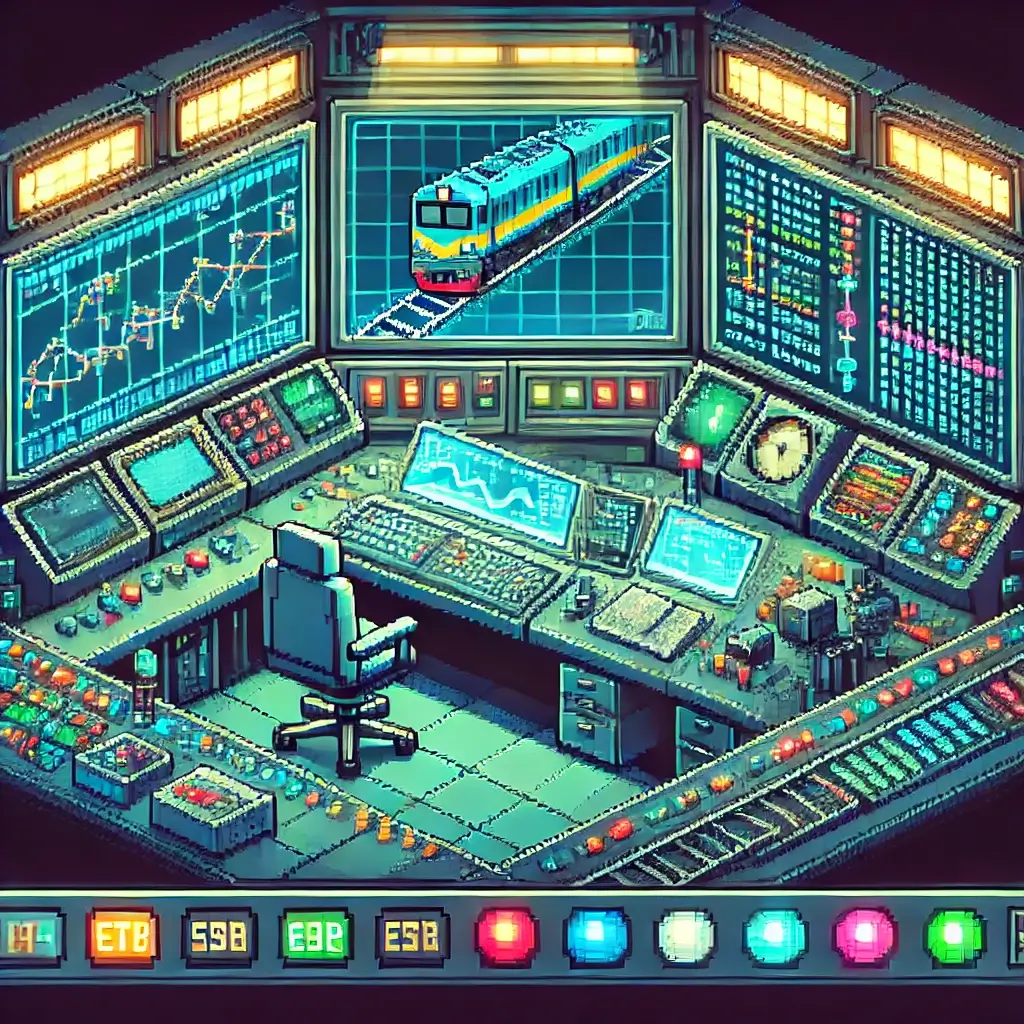
Unleash Your Inner Tycoon: 7 Mind-Blowing Strategies for Niche Simulator Games!
Hey there, fellow sim fanatics!
Are you tired of the same old action-packed blockbusters?
Do you crave a deeper, more meticulous gaming experience?
Then you, my friend, are in the right place!
Welcome to the wonderful, often perplexing, and utterly addictive world of niche simulator games!
From the rhythmic chugging of a meticulously managed train in a **train simulator** to the satisfying hum of a perfectly optimized farm overflowing with bizarre, modded crops, these games offer a unique blend of challenge, creativity, and calm.
But let’s be real, they can also be incredibly daunting, right?
It’s not just about clicking buttons; it’s about understanding complex systems, anticipating problems, and sometimes, just sometimes, embracing glorious chaos.
I’ve spent countless hours, probably more than I care to admit, buried deep in the digital soil of farming sims and meticulously planning routes in **train simulators**.
I’ve celebrated triumphs (like finally getting that tricky mod to work without crashing the entire game) and gnashed my teeth in frustration (like when a single, misplaced track derails an entire hour’s worth of progress).
And through it all, I’ve gathered some insights, some hard-won wisdom, that I’m just bursting to share with you.
Consider this your personal guide, forged in the fires of virtual industries and tilled digital fields.
Let’s unlock the secrets to becoming a true master of your chosen simulation!
Table of Contents
Understanding the Sim: It’s More Than Just a Game
First things first, let’s talk about the mindset.
Niche simulators aren’t like your typical “jump in and shoot stuff” games.
They demand patience, a keen eye for detail, and a willingness to learn.
Think of it less as a game and more as a detailed, interactive model of a real-world system.
Whether you’re managing complex railway networks in a **train simulator** or cultivating vast fields in a farming sim, you’re essentially becoming a digital architect, an engineer, or an agricultural mogul.
Deep Dive into Mechanics
Before you even think about building that epic rail network or planting your first magical glowing crop, take some time to understand the core mechanics.
Seriously, read the in-game tutorials, even if they seem dry.
Watch a few beginner videos from experienced players.
It’s like learning to drive a car – you wouldn’t just hop in and floor it, would you?
No, you’d learn about the accelerator, the brake, the steering wheel, and how they all interact.
In a **train simulator**, this means understanding signaling systems, track gradients, locomotive power, and the intricacies of scheduling.
In a farming sim, it’s about crop cycles, soil types, machinery maintenance, and the delicate balance of supply and demand.
Ignorance is not bliss in these games; it’s a fast track to bankruptcy or, worse, a spectacular train crash.
And trust me, a spectacular train crash after hours of careful planning is not a fun experience.
I once spent an entire evening meticulously setting up a coal delivery route in my favorite **train simulator**, only to realize I’d forgotten a crucial signal.
The resulting head-on collision was both devastating and strangely beautiful in its digital destruction.
Lesson learned: always double-check your signals!
Modding Madness: Your Key to Infinite Possibilities
Alright, let’s get to the fun stuff – mods!
If you’re playing a niche simulator game without exploring its modding community, you’re seriously missing out.
Mods are the lifeblood of these games, transforming them from great to absolutely legendary.
They can add new content, improve existing features, fix bugs, or even completely overhaul the game experience.
Think of them as expansion packs created by passionate fans, often for free!
Where to Find the Good Stuff
The first place to look is usually the official modding hub for the game, if it has one.
Steam Workshop is a massive one for many PC games, offering easy one-click installation.
Beyond that, dedicated fan forums and websites are treasure troves.
For example, if you’re into farming sims like Stardew Valley or Farming Simulator, there are enormous communities dedicated to creating and sharing new crops, buildings, vehicles, and even gameplay mechanics.
For **train simulator** games, you’ll find everything from new locomotives and rolling stock to entire routes created by dedicated enthusiasts.
Just a word of caution: always download mods from reputable sources to avoid any nasty surprises.
You don’t want to accidentally install something that messes up your save file or, even worse, your computer.
Don’t Be Afraid to Experiment
My advice? Don’t be shy!
Start small, with a few quality-of-life mods that enhance the experience without dramatically altering the core gameplay.
Then, as you get more comfortable, start experimenting with larger content mods.
I remember when I first discovered the “Realistic Seasons” mod for a farming sim.
It completely changed how I approached planting and harvesting, making the game feel so much more immersive and challenging.
It was a game-changer, literally!
But remember, some mods might conflict with each other.
It’s part of the fun (and occasional headache) of modding.
Always back up your save files before installing major mods!
And if something breaks, the modding community forums are your best friend for troubleshooting.
For some excellent modding resources, check out these communities:
Visit Nexus Mods (Huge Modding Hub!)
Economic Mastery: Balancing the Books in Your Virtual Empire
Unless your chosen simulator is purely artistic (and some are!), economics will play a huge role.
Money makes the world go ’round, even the pixelated one.
Whether you’re hauling freight in a **train simulator** for profit or selling your prize-winning pumpkins in a farming sim, understanding the flow of money is paramount.
Supply and Demand, Your Digital BFF
Most simulators, even the hyper-specific ones, have some form of a market system.
Prices fluctuate based on supply and demand, seasonal changes, or even random events.
Your job is to pay attention!
Don’t just blindly sell everything you produce at the first available buyer.
In a farming sim, learn which crops are most profitable in which season.
Diversify your crops so you’re not putting all your eggs (or tomatoes) in one basket.
In a **train simulator**, study the demand for different goods in various cities.
Is there a high demand for coal in the industrial zone? Great! Maximize your coal deliveries.
Is passenger traffic booming between two specific towns? Set up an efficient passenger line!
This isn’t just about making money; it’s about optimizing your entire operation to be as efficient and profitable as possible.
Budgeting Like a Boss
It’s easy to get carried away and spend all your hard-earned virtual cash on shiny new equipment or sprawling expansions.
But just like in real life, reckless spending can lead to financial ruin.
Before making a big purchase, ask yourself:
- Will this investment genuinely increase my profits or efficiency?
- Can I afford the ongoing maintenance costs? (Oh, those pesky maintenance costs!)
- Is there a cheaper, equally effective alternative?
I once went on a spending spree in a farming sim, buying all the latest, greatest machinery.
My farm looked amazing, but my bank account was screaming! I had to sell off a few fields just to stay afloat.
It was a painful lesson in budgeting, but one that stuck with me.
Always keep an eye on your expenses versus your income.
A healthy balance sheet is the foundation of a thriving virtual empire.
Optimization is Key: Streamlining for Success
This is where the true beauty of niche simulators shines.
It’s not just about doing things; it’s about doing them *better*, *faster*, and *more efficiently*.
Optimization is the art of squeezing every last drop of potential out of your systems.
Layout and Logistics
Whether it’s the layout of your farm or the design of your railway network, planning is everything.
A well-thought-out layout can save you countless hours of travel time, reduce bottlenecks, and increase throughput.
In a farming sim, consider the proximity of your fields to your storage and processing buildings.
Minimize travel distances for your workers and machinery.
Think about the flow of goods from harvest to sale.
For a **train simulator**, this means designing efficient track layouts that avoid unnecessary detours or congestion points.
Strategically place your signals, switches, and refueling stations.
A poorly designed junction can bring your entire network to a grinding halt.
I once spent an entire Saturday trying to untangle a spaghetti junction of tracks I’d built in a moment of overconfidence.
It was a nightmare, but the satisfaction of finally getting it right was immense!
Automation and Scaling
Many modern simulators offer varying degrees of automation.
Embrace it!
Automating repetitive tasks frees you up to focus on the bigger picture – planning, expanding, and dealing with unexpected challenges.
In farming sims, this could mean automated irrigation systems, self-driving tractors (if the modding allows!), or even automated selling mechanisms.
In **train simulators**, it’s all about advanced signaling, automatic routing, and setting up schedules that keep your trains running like clockwork.
Once you’ve optimized a smaller operation, you can then focus on scaling up.
Don’t just haphazardly expand; plan your growth strategically, ensuring your infrastructure can handle the increased load.
Troubleshooting Tenacity: When Things Go Wrong (and They Will)
Let’s be honest: things will go wrong.
It’s an inevitable part of playing complex simulation games.
Trains will derail, crops will wither, factories will grind to a halt.
But this isn’t a sign of failure; it’s an opportunity to learn and grow!
The Debugging Detective
When a problem arises, don’t just throw your keyboard across the room (as tempting as it might be sometimes).
Become a debugging detective!
- What exactly happened?
- What were you doing just before the problem occurred?
- Are there any error messages? (Read them carefully!)
- Can you replicate the issue?
Most simulators have logs or in-game messages that can give you clues.
In a **train simulator**, a derailment might be due to excessive speed on a curve, a faulty switch, or an incorrect signal.
Check the track, the signals leading up to the incident, and the train’s speed.
In a farming sim, dead crops could be due to lack of water, wrong fertilizer, or planting out of season.
Check your resource levels and the environmental conditions.
I once spent an hour trying to figure out why my trains kept disappearing into the ether, only to realize I’d accidentally deleted a small section of track in a tunnel.
The trains were literally falling off the map!
It was a facepalm moment, but a good reminder to meticulously check every detail.
The Power of the Undo Button (and Save Files!)
Don’t be a hero! Use the undo button if your game has one.
And more importantly, save your game frequently!
Create multiple save files, especially before making major changes or trying out a new mod.
This way, if something goes horribly wrong, you can always revert to an earlier, stable version.
It’s like having a digital time machine for your mistakes!
The Power of Community: Your Secret Weapon
You are not alone in your niche simulator journey!
The communities around these games are often some of the most dedicated, helpful, and passionate groups of gamers you’ll ever encounter.
Don’t underestimate the power of connecting with fellow enthusiasts.
Forums, Discord, and YouTube
If you’re stuck on a problem, need advice, or just want to share your latest achievement (like building the most complex rail network in a **train simulator** or harvesting a record-breaking crop), these are your go-to places.
- Official Game Forums: Often moderated by developers or long-time players, these are great for specific game mechanics and troubleshooting.
- Reddit Communities: Subreddits for popular sim games are incredibly active, full of tips, tricks, and discussions. You’ll find a subreddit for almost any major sim game.
- Discord Servers: Many games have official or unofficial Discord servers where you can chat in real-time with other players, get quick answers, and share screenshots of your progress.
- YouTube Creators: Look for “Let’s Play” series, tutorials, and advanced strategy guides from content creators who specialize in your game. They often reveal hidden mechanics or efficient workflows you might never discover on your own.
I’ve personally learned so much from watching YouTube videos of other players’ setups, especially for complex logistics in **train simulators**.
It’s like having a free masterclass in game design and optimization.
Don’t be afraid to ask questions!
The community is usually very welcoming to newcomers, and even seasoned players love to share their knowledge.
You might even find new mods or strategies you never knew existed!
Here are some great community resources:
Embrace Failure: Learn, Adapt, Overcome
This might sound counterintuitive, but it’s perhaps the most important tip I can give you.
In niche simulator games, failure isn’t the end; it’s a stepping stone.
You will make mistakes.
Your grand plans will sometimes spectacularly backfire.
You’ll build a magnificent railway only to realize it’s completely inefficient, or your prize-winning crops will suddenly die due to a disease you didn’t anticipate.
And that’s okay!
The Loop of Improvement
Each setback is an opportunity to learn.
- Why did that train derail? Was it speed? A signal issue?
- Why did my crops fail? Was it the soil? The weather? A bug?
Analyze what went wrong, adapt your strategy, and try again.
This iterative process of planning, executing, failing, analyzing, and refining is the core loop of mastery in these games.
It’s incredibly satisfying to overcome a challenge that once seemed insurmountable.
I remember feeling utterly defeated after a particularly nasty economic downturn in one of my city-building sims (a close cousin to niche simulators!).
My entire city was in ruins, businesses were failing, and citizens were leaving in droves.
But instead of giving up, I took a break, watched some videos, re-evaluated my city’s infrastructure and policies, and slowly, painstakingly, brought it back from the brink.
The satisfaction of seeing that city thrive again was unparalleled.
Patience, Young Grasshopper
These games are a marathon, not a sprint.
Don’t expect to be a master overnight.
Enjoy the process, the learning curve, and the slow but steady progress.
The deeper you dive, the more rewarding these hyper-specific simulator games become.
So, grab your virtual wrench, fire up your digital tractor, or signal your next locomotive adventure, and remember: every challenge is just another puzzle waiting to be solved.
Happy simulating!
—
Train Simulator, Farming Sim, Modding, Game Strategies, Niche Games